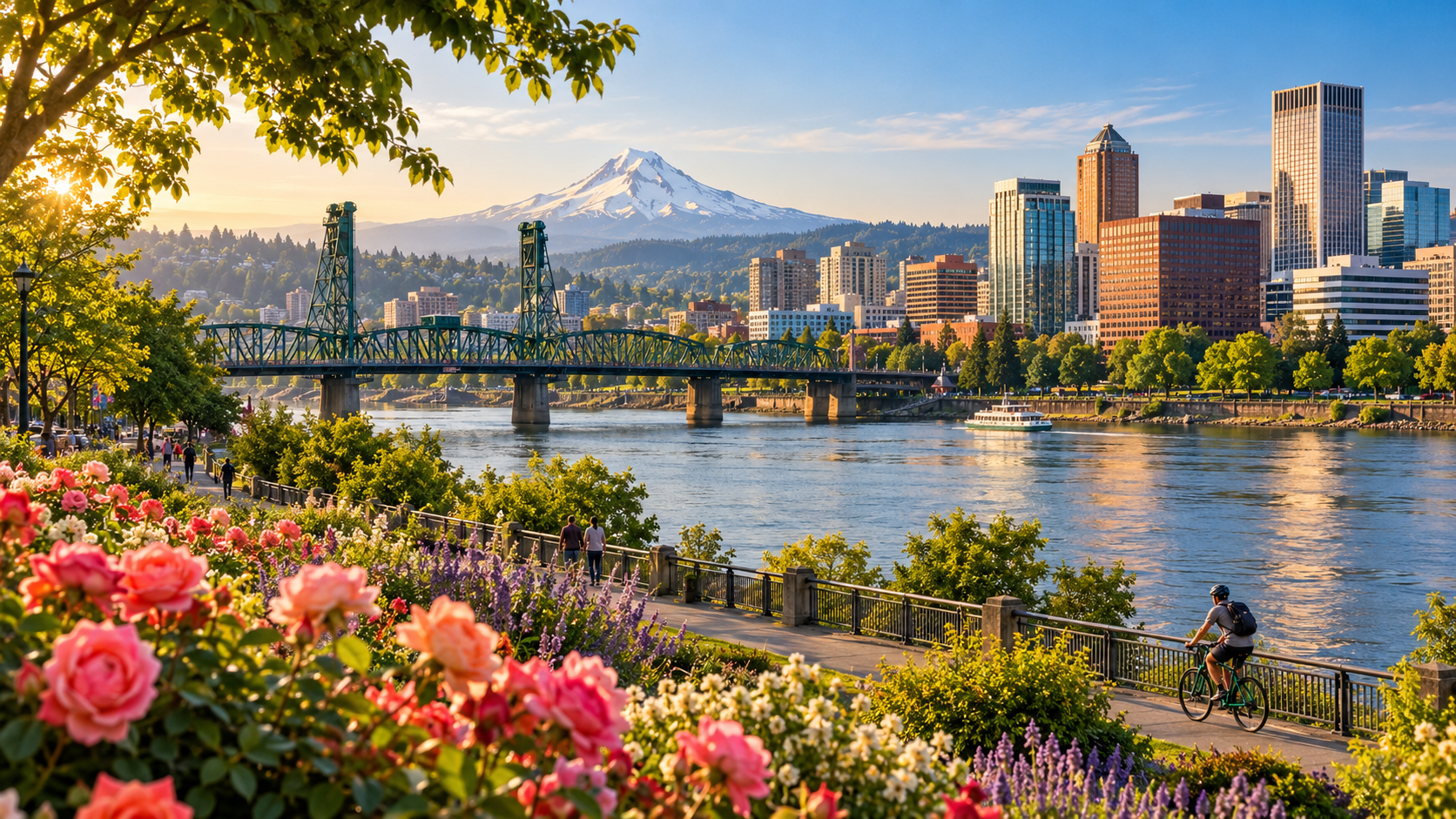
Portland has one of those climates people think they understand before they arrive.
Rainy. Gray. Coffee weather.
Done, right?
Not really.
Portland, Oregon has four distinct seasons, and the difference between visiting in January and July is much bigger than the city’s rainy reputation suggests. Summer can be warm, dry and surprisingly bright. Spring turns gardens almost absurdly green. Fall brings color, cooler hiking weather and the return of rain. Winter is damp and moody but can be great for food, museums and trips toward snowy Mount Hood.
So the best time to visit Portland is not one magic month.
For most first-time travelers, late May through June and September offer an especially good balance of comfortable weather, outdoor activities and city life. July and August are the safest bet for dry days, but they are also warmer and busier. October is beautiful if you can handle showers. Winter can be cheap, cozy and underrated.
Basically, Portland changes personality with the calendar.
Here’s how to pick the version you actually want.
The quick answer: when should you go?
If you’re planning a first trip and want easy sightseeing, outdoor dining, parks and day trips, aim for late May through June or September.
If dry weather is your top priority, July and August are stronger choices.
If you want flowers, gardens and that ultra-green Pacific Northwest look, April through early June is hard to beat.
If fall color, coffee shops and cooler walks sound better than patios and river swimming, try October.
And if lower hotel prices matter more than blue skies, January through March deserves a look.
| Season | Typical Feel | Best For |
|---|---|---|
| Spring | Mild, green, showery | Gardens, flowers, lower crowds, waterfalls |
| Summer | Warm, dry, long evenings | Hiking, patios, festivals, day trips |
| Fall | Mild at first, then cooler and wetter | Fall color, food trips, scenic drives |
| Winter | Cool, cloudy, rainy | Museums, coffee, lower prices, Mount Hood |
One thing matters more than tourists expect: Portland itself may be mild while the mountains, Columbia River Gorge and Oregon Coast are doing something completely different.
Always check the destination, not just downtown Portland.
Spring in Portland: green on top of green
Portland in spring looks like the city turned the saturation slider up.
Trees leaf out. Gardens bloom. Moss goes wild. Neighborhood yards start looking suspiciously professional even when they’re not.
March can still feel cool and wet, but flowers begin appearing early because Portland winters are fairly mild. By April and May, the city starts moving outdoors again.
There is a catch.
Rain.
Not usually dramatic tropical downpours. More often it’s on-and-off drizzle, light showers and cloudy stretches that make you wonder whether the forecast is technically correct or just giving up.
Bring a waterproof jacket and keep going.
Portlanders do.
April is great if you don’t need perfect weather
April works well for travelers who care more about gardens, food and neighborhoods than guaranteed sunshine.
Temperatures are mild enough for long walks, but you will probably need layers.
This is a good time for Washington Park, the Portland Japanese Garden, Lan Su Chinese Garden and residential areas where spring flowers are everywhere.
The city’s famous greenery looks especially fresh after months of rain.
Outdoor dining becomes possible on nicer days, though you should not plan every meal around a patio reservation.
Portland weather has opinions.
May may be the sweet spot
May is one of the easiest months to recommend.
Days get longer. Temperatures climb. Rain becomes less persistent. Parks and gardens look excellent.
You can still encounter wet days, but the city increasingly shifts toward summer.
Late May also traditionally overlaps with Portland’s major rose-season celebrations and waterfront events.
If you want the city feeling active without peak midsummer heat, May makes a lot of sense.
Pack for two seasons anyway.
A sunny 70-degree afternoon and a cool damp morning can easily exist in the same trip.
June is probably the safest all-around choice
If someone forced me to pick one month for a first-time Portland trip, June would make a strong case.
Daylight stretches deep into the evening. Temperatures are usually pleasant. The landscape is still very green, and summer outdoor culture is kicking into gear.
Portland Rose Festival events traditionally cluster around late May and early June, bringing activity to the waterfront and other parts of the city.
June is also a nice month for combining Portland with the Columbia River Gorge.
Waterfalls tend to look better earlier in the warm season than they do after a long dry summer.
And trails can feel more comfortable before the hottest part of the year.
Summer in Portland is much drier than people expect
Here is the big surprise.
Portland summers are usually dry.
July and August can go through long stretches with little rain, and average daytime highs reach around 81°F.
Humidity is also lower than many Americans from the East Coast or Midwest expect.
So summer here often feels easier than the temperature number suggests.
Long evenings change the city too.
People stay outside. Patios fill. Parks stay active. Bicycles appear everywhere. Riverfront spaces get busier.
It is the season when Portland most obviously stops being the rainy city stereotype.
July is for people who want reliable outdoor weather
July is one of the driest and sunniest times to visit.
If your plans include hiking, biking, outdoor dining and day trips, that’s useful.
The tradeoff is predictable: more visitors, stronger demand for lodging and hotter afternoons.
Heat waves can happen too.
Portland’s average summer temperatures are moderate, but averages do not protect you from unusually hot days.
Check the forecast close to your trip rather than assuming every July afternoon will sit nicely at 78°F.
August is warm, dry and great for road trips
August has similar advantages.
Warm days. Low rain chances. Good access to mountain trails. Easy Oregon Coast trips.
This may be the easiest month for travelers who want to combine the city with outdoor destinations.
Mount Hood hiking areas are generally more accessible after mountain snow has melted. The Columbia Gorge is easy to explore. The coast can be pleasant, though coastal temperatures often stay much cooler than Portland.
One thing to keep in mind is wildfire smoke.
Smoke is not guaranteed, but late summer in the Pacific Northwest can sometimes bring poor air quality depending on regional wildfire conditions.
If outdoor activities are central to the trip, check current air-quality reports shortly before traveling.
September might be Portland’s best-kept seasonal compromise
September is excellent.
Seriously.
Average daytime highs are still around the mid-70s Fahrenheit early in the month. Rain usually remains limited compared with late fall and winter. Summer crowds begin thinning, but outdoor activities remain easy.
For many visitors, that is the sweet spot.
You can hike during the day, eat outside in the evening and still get a little more breathing room than in July.
The light starts changing too.
Late-summer Portland has a softer feel than peak July.
If you want dry-ish weather without choosing the absolute busiest summer window, September should be near the top of your list.
Fall begins gently and then Portland remembers it rains
September often behaves like summer.
October starts negotiating.
November has made its decision.
Early fall can be fantastic. Temperatures cool, leaves change and hiking becomes more comfortable. By mid-October, showers become more common, and by November the classic wet-season rhythm settles in.
That sounds like a downside.
It can actually be part of the appeal.
Portland does cozy weather very well.
Bookstores, cafés, breweries, food halls and neighborhood restaurants suddenly make more emotional sense when the sidewalk is wet.
October is one of the prettiest months
If you like fall, October is a strong choice.
Trees across Portland turn yellow, orange and red, especially in parks and older residential neighborhoods.
Washington Park, Laurelhurst Park and tree-lined streets around the city can look beautiful.
The Columbia River Gorge also becomes interesting as fall color moves through lower elevations.
But rain starts returning.
The solution is simple: do not plan your entire trip around dry weather.
Build a mix of indoor and outdoor days.
November is for travelers who genuinely like moody weather
November gets wetter and cooler.
Daylight shrinks noticeably.
If you came for all-day hiking and patio cocktails, this probably isn’t your month.
If you came for food, books, coffee and fewer tourists, it starts making more sense.
Hotel demand may also be easier outside major holiday periods.
And Mount Hood starts transitioning toward winter activities as snow accumulates at elevation.
Winter Portland is not as harsh as the map makes it look
Portland sits far north compared with many U.S. cities, but winters are fairly mild.
Typical daytime temperatures often stay in the 40s Fahrenheit.
Snow in the city happens, but significant snowfall is not an everyday winter feature.
Rain is much more common.
The bigger issue is occasional ice or snow events because the city is not built for heavy winter weather in the way Minneapolis or Denver is.
A modest storm can disrupt transportation and close businesses.
So if winter weather is in the forecast, pay attention.
December can be cozy rather than miserable
December means short days, cool temperatures and frequent gray skies.
It also means holiday lights, warm restaurants, bookstores, coffee shops and fewer expectations that you should spend ten hours outdoors.
This is a good season for Powell’s Books, museums, neighborhood food crawls and breweries.
Then there is Mount Hood.
In winter, the mountain becomes a major reason to visit the region.
Snow sports are often available within a reasonable drive of Portland, giving you a city-and-mountain combination that feels very Pacific Northwest.
January and February can save money
These are among the least obvious tourist months.
That can work in your favor.
Flights and hotels may be more attractive than during summer, though prices always depend on dates, events and demand.
The city feels local.
There are fewer visitors competing for restaurant tables and hotel rooms.
But outdoor flexibility is essential.
Trails may be muddy. Mountain travel may require winter driving awareness. Coastal storms can make a day trip more dramatic than relaxing.
For a food-first city weekend, though, winter is underrated.
Best month for gardens and flowers
Portland takes gardens seriously.
The city’s mild climate supports an impressive variety of plants, and spring is the obvious showcase.
March through May brings different waves of blooms. Roses begin building toward late spring and summer, while other flowering trees and garden displays appear earlier.
Late May and June are especially appealing if roses matter to you.
Portland’s identity as the Rose City is not just marketing.
So if your ideal trip includes Japanese Garden mornings, neighborhood walks and actual flowers rather than brown winter branches, spring wins.
Best time for outdoor activities
July through September offers the most reliable conditions for hiking, cycling and outdoor day trips.
But there is a nuance.
The driest month is not automatically the prettiest month.
Waterfalls in the Gorge may have stronger flow earlier in the season. Landscapes can look greener in late spring and early summer. By August, some lower-elevation areas feel drier.
- Choose May or June for greener scenery and active waterfalls.
- Choose July or August for the lowest rain risk.
- Choose September for warm weather with somewhat lighter crowds.
- Choose October for fall color and cooler hiking temperatures.
- Check wildfire smoke conditions during late summer.
And always bring a layer.
Even in summer, mornings and evenings can feel cooler than midday.
Best time for Columbia River Gorge day trips
The Columbia River Gorge sits just east of Portland and is one of the city’s biggest travel advantages.
Waterfalls, hiking trails, viewpoints and the Columbia River itself make it an obvious day trip.
Late spring is gorgeous.
Waterfalls tend to have good flow, greenery is fresh and temperatures are easier for hiking than midsummer.
Summer works too, especially for longer trail days, but parking and popular trailheads can get busy.
Fall adds color and cooler temperatures.
Winter can be dramatic, but ice, snow and road conditions require more planning.
Best time for Mount Hood
This depends entirely on what you want from the mountain.
For skiing and snowboarding, winter is the obvious answer.
For hiking and scenic drives, summer through early fall works better.
Higher-elevation trails can hold snow well after Portland itself feels fully warm.
Do not look at a sunny downtown forecast and assume Mount Hood is experiencing the same season.
Elevation makes its own rules.
Best time for an Oregon Coast day trip
People often assume summer guarantees beach weather.
That is not how the Oregon Coast works.
It can be cool, windy and foggy even when Portland is warm and sunny.
Summer still gives you the best odds for calmer conditions and long daylight, but pack a jacket regardless.
September can be especially nice because inland heat eases and coastal crowds begin dropping.
Spring and winter produce more dramatic weather, which can be beautiful if you’re going for stormy ocean views rather than swimming.
And about swimming: Pacific water here is cold.
This is not Southern California.
What about Portland’s famous rain?
The rain is real.
The mythology around it is slightly exaggerated.
Portland gets a long wet season, but many rainy days involve light or intermittent precipitation rather than nonstop heavy rain.
The bigger psychological factor is cloud cover.
Winter stretches can feel gray.
Some travelers love that atmosphere. Others start searching for flights to Arizona after forty-eight hours.
Know yourself.
If sunshine strongly affects your mood, choose summer or September.
How Portland weather compares by month
| Month | Approx. Daytime High | Travel Feel |
|---|---|---|
| January | 47°F | Cool, rainy, quiet |
| March | 57°F | Early blooms, wet but improving |
| May | 68°F | Green, mild, excellent for gardens |
| June | 74°F | Long days, pleasant, strong all-around choice |
| July | 81°F | Dry, sunny, busy |
| August | 81°F | Warm, dry, great for road trips |
| September | 76°F | Warm, calmer, excellent balance |
| October | 64°F | Fall color, increasing rain |
| December | 46°F | Cool, wet, cozy city weather |
Remember that averages are not promises.
Portland can have heat waves in summer and occasional winter freezes.
Best time for food lovers
Honestly?
Any season.
Portland’s food culture does not shut down because rain started.
But different seasons offer different advantages.
Summer means farmers markets, patios, food carts and long evenings. Fall brings mushrooms, apples and richer seasonal menus. Winter turns ramen, bakeries and cozy neighborhood restaurants into the main event.
Spring introduces fresh produce and outdoor dining gradually.
If food is your top reason for visiting, weather should probably be a secondary concern.
You’ll eat well either way.
Best time for fewer crowds
January through March generally provides the quietest city experience, excluding specific events and holiday weekends.
November can also be calm.
But the better compromise may be April or October.
You get more usable daylight than deep winter while avoiding peak summer demand.
September can also feel noticeably easier than July while keeping much of the good weather.
What should you pack?
Portland rewards layers.
This is true almost year-round.
- Bring a waterproof shell in spring, fall and winter.
- Pack comfortable shoes that can handle damp pavement.
- Carry a light sweater or jacket even in summer.
- Bring sunscreen for July, August and clear mountain days.
- Pack hiking footwear if the Gorge or Mount Hood is part of the trip.
- Do not assume a small umbrella makes you look like a tourist. Nobody cares.
The local joke about Portlanders refusing umbrellas is fun.
Being soaked for three hours is less fun.
How many days should you spend in Portland?
Three full days works well for the city itself.
Four or five is better if you want a relaxed pace.
If the Columbia Gorge, Oregon Coast and Mount Hood all matter, plan at least five to seven days in the region.
That way Portland becomes an actual destination instead of the hotel where you sleep between road trips.
A simple trip might look like this:
- Day one: downtown, Pearl District, Powell’s Books and Northwest Portland.
- Day two: Washington Park, Japanese Garden and neighborhood food stops.
- Day three: Eastside neighborhoods, food carts and breweries.
- Day four: Columbia River Gorge.
- Day five: Oregon Coast or Mount Hood depending on season.
Do not schedule both Mount Hood and the coast on the same day because they look close enough on a zoomed-out map.
That is how vacations become driving tests.
FAQ About the Best Time to Visit Portland
What is the best month to visit Portland, Oregon?
June and September are two of the strongest all-around choices. June offers long days, green landscapes and mild weather, while September is still warm and relatively dry with somewhat lighter crowds.
What is the driest time of year in Portland?
July and August are typically Portland’s driest months. They are the safest choice if outdoor plans and low rain risk matter most.
When is Portland the rainiest?
Late fall and winter are the wettest part of the year, especially November through January. Rain is often frequent rather than extremely heavy.
Is Portland worth visiting in winter?
Yes, especially for food, coffee, bookstores, museums and access to winter activities around Mount Hood. Expect short days, cloudy skies and frequent rain.
When is the best time to see roses in Portland?
Late spring through summer is generally the strongest period, with late May and June especially associated with rose displays and the city’s traditional Rose Festival season.
Is September a good time to visit Portland?
Yes. September often combines warm daytime temperatures, relatively low rainfall and fewer peak-summer visitors, making it one of the best months for a first trip.
How many days are enough for Portland?
Three days works for the city itself. Plan five to seven days if you also want the Columbia River Gorge, Mount Hood or an Oregon Coast day trip.
So, What Is the Best Time to Visit Portland?
If you want the easiest answer, go in June or September.
Those months give you much of what makes Portland appealing without forcing you into the extremes of winter rain or peak summer heat.
But the more useful answer is that the best time to visit Portland depends on why you’re coming.
Come in spring if you want gardens dripping with green after months of rain.
Come in July if you want long dry days and hiking.
Come in September if you want summer weather without quite as much summer energy.
Come in October if wet sidewalks, fall leaves and coffee shops sound romantic rather than annoying.
Come in winter if you want cheaper city weekends and snow in the mountains.
Portland is not a destination with one perfect season and eleven wrong ones.
Its entire personality shifts during the year.
That’s part of the appeal.
There is the Portland of June evenings when the sun hangs around until nearly bedtime.
There is the Portland of October leaves stuck to wet sidewalks.
There is the January version where everyone seems to be inside a café, bookstore or ramen shop.
And there is early spring, when flowers appear while the forecast is still trying to decide what season it is.
Pick the one that sounds like your kind of trip.
Just bring a jacket.

Leave a Reply