
Landmarks in Canada: how to choose the right places for your trip
Choosing landmarks in canada can be harder than finding them. A first-time visitor might picture Banff National Park, Parliament Hill, Old Quebec, or the cliffs of Cape Breton, yet these places suit very different kinds of trips. One offers mountain scenery and wildlife, another provides a walk through a capital city, and a third combines historic architecture with restaurants, ferries, and evening entertainment.
The best choice depends on how much time you have, whether you want cities or wilderness, and whether you would rather explore one region carefully or cross several provinces. It also helps to distinguish a landmark that looks impressive from a place that rewards a full day. Niagara Falls is easy to see in a few hours; some national parks become more memorable when you allow time for a trail, a viewpoint away from the main crowd, and a change in weather.
This guide compares widely recognized Canadian sights by region, setting, and travel style. It also explains how to plan around seasons, access, weather, and crowd patterns without pretending that every landmark works equally well for every visitor.
- For dramatic scenery: prioritize the Rocky Mountains, coastal viewpoints, glacier-fed lakes, or the fjords of Newfoundland and Labrador.
- For history and architecture: consider Old Quebec, Parliament Hill, the Rideau Canal area, historic Halifax, and other city centers with walkable heritage districts.
- For culture and museums: look for institutions that explain Indigenous nations, Canadian history, art, science, and immigrant communities rather than treating a city as a collection of quick photo stops.
- For families: compare science centers, aquariums, waterfront promenades, and accessible urban attractions with long scenic drives.
Which Canadian regions offer the strongest landmark combinations?
Canada is geographically large, so the best region often depends on what you want to experience together. Combining two complementary sights within one area is usually more rewarding than racing between distant destinations. For example, Vancouver pairs an urban waterfront with mountains and coastal scenery, while Montréal offers old streets, markets, museums, and distinctive neighborhoods within a compact area.
| Region | Landmark highlights | Best for | Planning consideration |
|---|---|---|---|
| British Columbia | Stanley Park, Vancouver waterfront, Granville Island, Capilano Suspension Bridge, Banff and Jasper | Urban scenery, mountain drives, wildlife, Pacific coast | Allow additional travel time for distances between Vancouver, the Rockies, and the Interior. |
| Alberta | Lake Louise, Moraine Lake, Banff, Jasper, Icefields Parkway | Mountains, lakes, autumn color, dramatic road trips | Road access can be affected by weather, construction, parking demand, and seasonal closures. |
| Ontario | Niagara Falls, Parliament Hill, the Royal Ontario Museum, Toronto waterfront | First visits, city breaks, museums, easy access from the United States | Toronto and Ottawa are large destinations; choose neighborhoods and attractions deliberately. |
| Québec | Old Quebec, Château Frontenac, Montmorency Falls, Tadoussac | Historic streets, French-language culture, scenic driving | Seasonal conditions can change quickly, and popular old-city streets are busiest at peak travel times. |
| Atlantic Canada | Halifax waterfront, Cape Breton, Peggy’s Cove, Lunenburg, Bay of Fundy | Coastal scenery, maritime history, road trips | Distances look manageable on a map but can consume much of a day. |
| British Columbia and Yukon | Rocky Mountain sites, the Yukon River, Whitehorse, coastal towns | Remote scenery, long drives, fewer crowds | Prepare for limited services, larger fuel intervals, and rapidly changing weather. |
Travelers with limited time should usually build around one major urban base and one regional day trip. Those with a week or more can add a second province, but a domestic flight may save more time than an extended drive. In practical terms, two well-chosen bases are often better than five overnight stops with little time to see anything.
Consider access as part of the landmark choice. A spectacular site reached by a complicated transfer, restricted parking system, or crowded bus may not fit the trip as well as a slightly less famous place that you can explore calmly. The most memorable day is not always the one with the longest checklist. It is often the one that leaves enough energy to stop when conditions, a viewpoint, or a local district turn out to be worthwhile.
Landmark highlights across cities, coasts, and mountains
Some of Canada’s best-known places are easy to recognize, but their appeal depends on what you do beyond the signature viewpoint. In Toronto, the waterfront, St. Lawrence Market, Casa Loma, and the Royal Ontario Museum offer different kinds of city experiences. In Ottawa, Parliament Hill is a ceremonial focal point, while the Rideau Canal, ByWard Market, and the National Gallery of Canada provide a broader picture of the capital.
Old Quebec is best understood as a neighborhood rather than a single building. Château Frontenac dominates the skyline, but the surrounding lanes, fortifications, churches, river views, and public spaces create the experience. Montréal adds neighborhoods such as Old Montréal, the Plateau, Mile End, and the markets, where food, public art, and street life often matter more than a checklist of monuments.
On the Pacific coast, Vancouver’s skyline is framed by mountains and water, but Stanley Park, the Granville Island Public Market, and neighborhoods such as Gastown and Commercial Drive provide more texture than the waterfront alone. The drive north offers different landmarks: coastal viewpoints, Indigenous and maritime heritage sites, and the transition from urban British Columbia to the Rockies and Vancouver Island.
Atlantic Canada rewards travelers who leave room for detours. Halifax has a compact waterfront and a strong maritime identity. The scenery around Cape Breton includes cliffs, coves, and long coastal roads, while Peggy’s Cove is a brief but memorable stop. Farther east, Lunenburg, the Bay of Fundy, Gros Morne, and the coastal landscape of Newfoundland and Labrador offer a different scale of maritime travel.
| Landmark or place | Province or territory | Main appeal | Best way to approach it |
|---|---|---|---|
| Banff National Park | Alberta | Mountain scenery, lakes, wildlife, hot springs area | Give the park more than a brief drive-through and use viewpoints or trails suited to your ability. |
| Old Quebec | Québec | Preserved architecture, fortifications, riverfront | Walk through different streets rather than stopping only at the most photographed façades. |
| Parliament Hill | Ontario | Government architecture and a central Ottawa landmark | Check visitor access in advance and combine it with other central-city sights. |
| Niagara Falls | Ontario | Waterfalls, riverfront, nearby wine country | Allow time for the falls and decide whether nearby stops deserve a separate day. |
| Stanley Park and Vancouver waterfront | British Columbia | Urban nature, harbor views, seawall | Use transit or park outside peak periods if parking is the priority. |
| Cape Breton Highlands | Nova Scotia | Coastal cliffs, trails, scenic routes | Drive slowly and plan fuel and stops around the Cabot Trail. |
| Percé and the Gaspé Peninsula | Québec | Rock formations, views of Bonaventure Island, coastal scenery | Build an itinerary that accounts for long driving segments and weather. |
| Gros Morne National Park | Newfoundland and Labrador | Fjords, highland scenery, unusual geology | Pair viewpoints with a longer walk or cruise if conditions and time permit. |
For a visitor who wants a manageable introduction, Niagara Falls, Old Quebec, Banff, and Parliament Hill offer strong and distinct experiences. They are not interchangeable. One is defined by water and gorge walls, one by a historic urban landscape, one by mountain geography, and one by political architecture. Deciding which qualities matter most is the first step in building a coherent route.
Natural landmarks and the special meaning of a protected “Canadian Landmark”
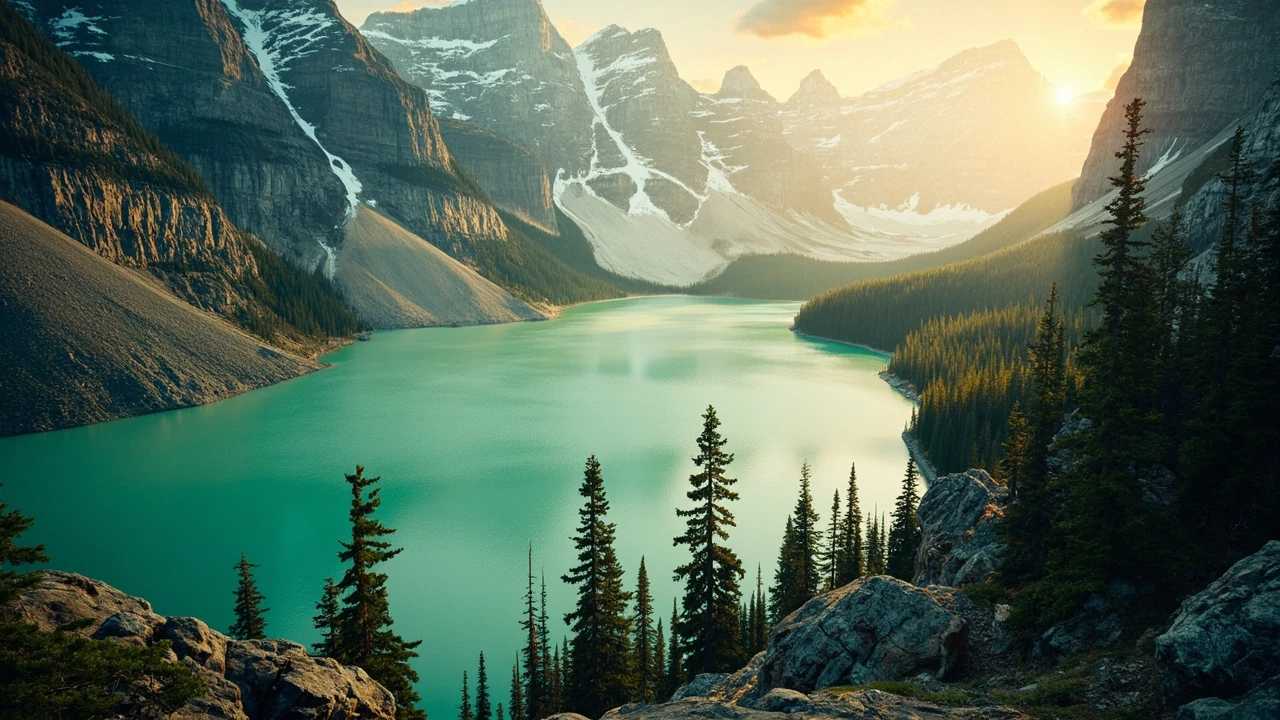
Canada’s natural attractions include icefields, fjords, badlands, cave systems, coastal cliffs, and lakes that appear almost implausibly blue. The best-known landscapes often belong to national or provincial parks, municipal parks, or other protected areas. Their names and boundaries can be confusing because Canada does not use one uniform public-land system across every level of government.
There is also a narrower official meaning behind the phrase “Canadian Landmark.” The history of Canada’s protected-landmark designation is explained on the protected-landmark designation page, which provides useful background for this point. The program was envisioned during the 1970s and 1980s for isolated natural features of outstanding or unusual scientific interest. Pingo Canadian Landmark in the Northwest Territories is the only one established under that designation, while a proposed site at Nelson Head was not formally established.
That official status should not be confused with the broad way travelers use the word landmark. Niagara Falls, Banff, and the Forks of the Credit River can all be internationally recognized landmarks without sharing the same legal designation. The distinction matters if you are researching a protected area for conservation reasons rather than planning a sightseeing trip.
For outdoor sightseeing, the amount of time available changes the experience more than the landmark’s fame. A viewpoint may take 30 minutes to reach and 15 minutes to photograph. A short trail can reveal how the valley, coast, or forest actually feels. A full-day visit gives you room for weather, wildlife, and an unplanned stop without compressing every experience into a hurried itinerary.
- Rocky Mountains: Lake Louise and Moraine Lake are major stops, but surrounding trails, overlooks, and quieter sections of Banff or Jasper often provide more space to appreciate the scenery.
- Pacific coast: Vancouver Island and the Great Bear Rainforest area are better understood through coastal communities, marine landscapes, and short interpretive walks than as a single photo stop.
- Atlantic coast: Cape Breton, the Bay of Fundy, and Newfoundland’s western shore work well for road travelers who can tolerate variable weather and changing plans.
- Northern landscapes: The Yukon, Northwest Territories, and northern Manitoba offer spacious scenery and distinctive ecosystems, but distances, services, and seasonal access require more preparation.
Leave room for the landscape to alter your plan. Wildlife may be visible near a road, fog may hide a distant ridge, or wind may make a waterfront walk uncomfortable. A backup activity nearby lets you continue the day without treating every change in conditions as a failure.
How to match Canadian landmarks to your travel interests
Landmark selection becomes easier once the trip has a priority. History travelers may care less about a distant scenic overlook than a well-guided historic district. Food-focused visitors may prefer a walk through Old Montreal, a market meal, and a neighborhood food tour over a photo-oriented checklist. Families often value interactive museums, clean restrooms, short walks, and places where children can move rather than sit through long presentations.
A nature-first trip might use Banff as a base for Jasper, with a route that includes the Icefields Parkway and several short walks. The same number of days in Atlantic Canada could cover Halifax, Peggy’s Cove, and part of Cape Breton, but the pace and weather conditions would be different. There is no universal ranking because the routes solve different needs.
- Choose one main theme for the trip. Decide whether the priority is mountains, cities, history, wildlife, food, or a scenic road journey.
- Pick two landmarks that work well together. Favor sites within the same region or on a route you would drive anyway.
- Add one experience that is not simply another viewpoint. This might be a museum, market, boat trip, trail, or neighborhood walk.
- Protect arrival time. Do not schedule a major attraction at the end of a day that includes a long flight or border crossing.
- Leave one flexible block. Weather, road conditions, and personal energy can alter the best possible order.
| Traveler priority | Strong landmark choices | Best base | Potential trade-off |
|---|---|---|---|
| Mountains and scenery | Banff, Jasper, Lake Louise, Moraine Lake | Calgary, Banff, or Jasper | Traffic and weather can make mountain travel slower than expected. |
| Historic cities | Old Quebec, Ottawa, Kingston, Halifax | Québec City, Ottawa, or Halifax | Historic districts often require walking despite compact distances. |
| Food and neighborhood culture | Montréal, Vancouver, Toronto, Québec City | A central neighborhood | Famous restaurant areas can be busy; less central areas need extra transport planning. |
| Family activities | Ontario Science Centre, Calgary Zoo, aquarium attractions, waterfront parks | Toronto, Calgary, Vancouver, or Montréal | Popular indoor attractions are best booked around school holidays and weekends. |
| Scenic driving | Cabot Trail, Icefields Parkway, Gaspé routes, Vancouver Island | Several overnight stops | Daylight driving time is shorter than total distance suggests. |
| Deep history and culture | Canadian museums, Indigenous heritage sites, Old Quebec, historic ports | Ottawa, Winnipeg, Québec City, or Halifax | Advance planning may be needed for guided visits or program schedules. |
One useful rule is to avoid treating a city as a stop between distant landscapes. Montréal, Québec City, Halifax, Ottawa, and Victoria all reward time on their own. A short overnight visit can produce a list of photographs without much understanding of the place. Adding a day often produces a more memorable trip than adding another distant landmark.
When to visit different Canadian landmarks
The best season depends on the region and the experience you want. Mountains, cities, and coastlines respond to weather differently. Summer provides easier road access to many northern areas and longer sightseeing days, but it also brings heavier demand. Autumn can deliver clear mountain views, autumn foliage, and fewer summer crowds, although weather becomes less predictable. Winter supports snow activities and urban festivals but limits access to some roads and viewpoints. Spring offers quieter conditions in some places, with variable snow, rain, or muddy trails.
Check conditions for the specific site rather than assuming a provincial forecast covers every area. Mountain passes, coastal roads, and ferry routes can experience different weather within the same day. This is especially important in northern British Columbia, Alberta, Québec, Newfoundland and Labrador, and the territories.
| Travel period | Advantages | Trade-offs | Landmark strategy |
|---|---|---|---|
| Late spring | Longer days, emerging vegetation, fewer peak-season crowds in some places | Snow and trail conditions can vary | Prioritize accessible viewpoints and verify each trail’s status. |
| Summer | Broadest access, many festivals, outdoor activities, longest daylight | Higher hotel demand, traffic, and busy trails | Start popular sites early and reserve time-sensitive activities ahead. |
| Autumn | Fall color, clearer mountain potential, calmer urban periods | Shorter days and sudden weather changes | Focus on scenic drives and visitor centers that may have reduced staffing after peak season. |
| Winter | Snow landscapes, skiing, festivals, fewer road travelers | Ice, closures, limited daylight, weather delays | Build flexibility into routes and confirm winter equipment requirements. |
Urban landmarks are generally easiest to visit in shoulder seasons because museums, restaurants, and public transit create a wider range of indoor options. A winter visit to Montréal, Toronto, or Québec City can still include major collections, markets, and architecture while bad weather makes a remote viewpoint less accessible. In summer, coastal fog can obscure cliffs even when nearby weather is clear, so photographers should allow another opportunity to see the coastline.
Weekends and holidays deserve special attention. Major attractions may be busiest from Friday evening through Sunday, while Monday can be quieter at some museums. Provincial parks and campgrounds can fill well before nearby urban accommodation. If a landscape is the main reason for the trip, check the area’s forecast and any local access notices shortly before departure.
Practical planning, access, and costs to consider
Budgeting for landmarks in canada involves more than admission fees. Transportation, parking, tolls, ferry reservations, airport transfers, and meals at popular visitor areas can add up. Some major landmarks are free to enter, including many outdoor viewpoints and public spaces, while museums, historic homes, towers, and specialized attractions may charge admission. Seasonal programs, guided tours, and reservation requirements vary, so confirm the terms on the attraction’s official website before relying on a specific price or feature.
- Choose the right base: Staying near the attraction can save commuting time, but a central neighborhood often gives better access to restaurants, groceries, and transit.
- Check official visitor information: Use the relevant park, museum, municipal tourism, or attraction site for current access, closures, weather, and reservation details.
- Plan the first and last hours: Traffic, parking, security lines, and returning rental cars can consume time even when the visit itself is short.
- Carry adaptable layers: Wind, rain, sun, and temperature can feel different within the same day, especially near water or at elevation.
- Bring the right footwear: A city landmark may be reached on paved paths, while a nearby trail can involve uneven ground, roots, mud, or snow.
- Protect valuables: Use the same practical awareness you would apply in any crowded sightseeing area, particularly around vehicles, viewpoints, and unattended belongings.
- Travel insurance for remote routes: Consider coverage relevant to the activities and weather conditions, especially when cellular service and road assistance are limited.
Accessibility needs attention too. A major attraction may have step-free entrances while surrounding streets, transit stops, trails, and viewing areas present different barriers. Historic sites can include uneven paving, narrow passages, stairs, and limited restroom access. Ask each venue about elevators, seating, accessible parking, sensory conditions, and alternative routes rather than assuming that one published label applies to the whole experience.
Food and rest deserve entries in the itinerary. Landmark districts are often compact but still involve a surprising amount of walking. A long museum visit, a scenic drive, and a harbor walk may total more physical effort than expected. Build in a meal break and a place to leave bags before choosing the next stop.
English and French are both official languages of Canada, but that does not mean every visitor must be bilingual. English-language signs and services are common in many major destinations, while Québec offers a strong French cultural setting. Learning a few basic French phrases can improve a visit in Québec, particularly when asking for directions or understanding a local distinction.
Common planning mistakes and two useful site guides
The biggest mistakes usually come from trying to cover too much or treating every famous place as equally suited to the traveler. A packed itinerary looks efficient on paper but can turn into a chain of parking lots, quick photographs, and long drives. Fewer stops with clear priorities will usually create a better trip.
- Do not underestimate driving time: Include fuel, food, construction, weather, and rest stops when estimating how long a scenic route will take.
- Do not rely on a single viewpoint: If possible, walk, take a boat, or use a different route to understand the place.
- Do not buy an attraction ticket before checking the date: Weather, holidays, and operating schedules can affect the best day to visit.
- Do not confuse a protected designation with a popular tourist attraction: Research the specific site if conservation status or legal boundaries matter to your trip.
- Do not ignore Indigenous history or local perspectives: Learn about the land, naming, and communities connected to the places you visit.
- Do not treat a photo stop as a meal plan: Remote areas may have long distances between open restaurants and limited hours.
- Do not plan around old advice: Roadworks, ferry schedules, transit patterns, and visitor-center hours can change, so verify current information close to travel.
- Do not bring the same schedule to every region: Cities reward walking and museums; coastlines and mountains reward flexibility and weather awareness.
For more context on how landmark-focused travel differs across countries, see Landmarks in Ecuador: Go Way Beyond the Galápagos. For a useful lesson in looking beyond a single famous square or central monument, compare it with Moscow, Russia: Much More Than Red Square.
Before locking the itinerary, write down the experience you want to remember. It might be seeing the Canadian Rockies from a quiet trail, understanding the history of a waterfront, photographing autumn foliage, sharing a meal in Old Quebec, or introducing children to Canadian history and wildlife. Once that goal is clear, every proposed landmark should have a practical role in delivering it. The strongest itinerary is not the one with the most famous names; it is the one that gives those places enough time, context, and flexibility to be meaningful.
Frequently asked questions
What are the most famous landmarks in Canada?
Among the most recognized are Niagara Falls, Parliament Hill, the Château Frontenac and Old Quebec, Banff National Park, the Canadian Museum for Human Rights, the CN Tower, Vancouver’s Stanley Park, and the historic waterfront of Old Halifax. Popularity depends on what visitors mean by a landmark, and less famous places often provide a closer look at daily life or regional culture.
What is the best-known landmark in Canada?
Niagara Falls is often the first answer because of its scale and international recognition, while Banff and the Canadian Rockies attract travelers looking for a landscape experience. Parliament Hill represents Canada’s political identity, and Château Frontenac is frequently associated with historic Québec. There is no single official ranking, so the best choice depends on whether you prefer natural scenery, architecture, history, or an urban visit.
How many days should I allow for Canada’s major landmarks?
Allow at least three to five days for one major region if you want to avoid a rushed tour. Two days can work for a nearby city or a single well-chosen park, while a broader route involving Ontario, Québec, and the Atlantic provinces usually needs much more time. Add travel days when crossing provinces because a direct distance can hide long driving hours.
What is the best Canadian landmark for a family trip?
The answer depends on the family’s age and interests. Indoor science and nature centers, aquariums, waterfront parks, and accessible urban museums are often more comfortable than long mountain drives. Older children may enjoy historic neighborhoods, boat trips, or wildlife-oriented exhibits, while younger travelers benefit from sites with short paths, play areas, and nearby food. Check accessibility and current operating details before choosing.
Are Canada’s landmarks expensive to visit?
Many outdoor sites, public spaces, and viewpoints are free, while museums, towers, historic homes, and guided activities may charge admission. The larger travel costs often come from transportation, accommodation, parking, and meals. Because fees and reservation rules vary, use the official attraction website for current prices and check for seasonal passes or bundled tickets only when they fit your itinerary.
Can I visit Banff and Jasper in one trip?
Yes. The two parks are connected by the Icefields Parkway, and many travelers visit both over several days. The drive is scenic, but it should not be treated as a quick transfer. Road construction, wildlife, weather, viewpoints, and trail opportunities can shape the pace. Staying in or near each park reduces backtracking, while Banff or Jasper can serve as a base for day trips.
What is the best time of year to visit Canadian landmarks?
Summer provides the broadest access and longest daylight, while autumn can offer quieter conditions and fall color. Winter supports snow and urban sightseeing but requires more weather planning. Spring may suit travelers who value fewer crowds and milder urban walks, although mountain and northern access can remain limited. The best season depends on the region and the attractions you prioritize.
Are there official Canadian landmarks other than Pingo?
Under the narrow federal protected-landmark designation described in the article, Pingo Canadian Landmark is the only established site. Nelson Head was proposed but was not formally established. This official term is different from the everyday use of “landmark” for famous cities, buildings, parks, waterfalls, and natural features.
Should I visit Niagara Falls or the Canadian Rockies?
Choose Niagara Falls if you want a major spectacle that is easy to combine with a city trip and can be explored in a relatively compact area. Choose the Canadian Rockies if you value wilderness, lakes, mountain roads, wildlife, and longer outdoor days. Both reward more than a brief stop, but they ask for different amounts of time, transportation, and weather preparation.
What is the most practical way to plan a Canadian landmark road trip?
Choose a clear geographic route, limit the number of overnight stops, and base each day around one main region. Add realistic driving time rather than mapping mileage alone, confirm fuel and food stops, and keep one flexible period for weather or delays. Reserve accommodations and time-sensitive attractions in peak periods, then check official notices shortly before departure.
Leave a Reply