
Vietnam landmarks for a first visit: choose the route before the stops
A Vietnam landmarks itinerary can look overwhelming because the country contains historic imperial sites, limestone caves, colonial-era streets, ancient trading towns, underground tunnels, river markets, beaches, and temple complexes that can be hundreds of miles apart. Trying to see all of them in one short trip usually means spending more time in transit than at the destinations themselves. The better approach is to select two or three regions, identify the landmarks that matter most to you, and build a route around them.
For many first-time visitors, the most satisfying combination is Hanoi in the north, central Vietnam around Hue and Hoi An, and Ho Chi Minh City in the south. Add Ha Long Bay or rural northern scenery if time allows, but resist the temptation to create a checklist that turns the journey into a race. A three-region trip can still move quickly, especially when trains, domestic flights, and airport transfers consume a full day.
The best Vietnam landmarks depend on what kind of experience you want. History enthusiasts may prefer the imperial complex in Hue and the former presidential complex in Ho Chi Minh City. Architecture fans can focus on Hanoi, Hoi An, and Sa Pa. Nature travelers usually prioritize Ha Long Bay, Phong Nha-Ke Bang, and the central coast. Food-and-market itineraries work well around Hanoi, Hoi An, Can Tho, and Ho Chi Minh City.
This guide compares the strongest landmarks by region, explains how to connect them, and highlights practical details that determine whether a visit feels rewarding. It focuses on durable information about places and planning rather than fragile details such as temporary closures or changing admission fees.
North Vietnam landmarks: start with Hanoi, then choose mountains, caves, or a bay
Hanoi is the easiest place to begin a northern itinerary because it is a major transport hub and contains several major Vietnam landmarks within a relatively compact historic center. The city rewards travelers who slow down. Its French-colonial streets, old merchant houses, lakes, temples, markets, and contemporary neighborhoods can be explored without a long checklist, while a day trip opens the door to nearby countryside.
Hoan Kiem Lake sits near the center of the old city and functions as both a practical orientation point and a cultural landmark. The lake is closely associated with Vietnam’s legend of the restored sword, while its surrounding streets contain cafés, restaurants, markets, and historic buildings. Visit it early in the morning for a quieter walk, or in the evening when the central area becomes busy. For broader historical context, Hanoi’s historical background explains how the city developed around dynastic, Chinese, French, and modern influences.
The Ho Chi Minh Mausoleum is one of the city’s most recognizable Vietnam landmarks. The monumental structure stands in a landscaped square near the center, and visitors commonly see the preserved body of Ho Chi Minh in a glass sarcophagus. Access arrangements and visitor procedures can change, so travelers should check current official guidance close to their visit and allow time for security screening and orderly entry. Dress respectfully and follow all site instructions.
The Temple of Literature offers a different view of the capital. Founded in the eleventh century and dedicated to Confucius, it preserves traditional Vietnamese architectural forms and has long been associated with learning and scholarship. The BBC’s mini guide to Hanoi describes the temple as a well-preserved example of traditional Vietnamese architecture and highlights the lively commercial character of the Old Quarter.
For a broader cultural visit, the Vietnam Museum of Ethnology includes collections of objects, textiles, art, and traditional architectural displays. Its grounds and exhibits provide useful context for the country’s many ethnic communities. The museum works well as a half-day destination, especially when paired with the Temple of Literature, because the two places illuminate different parts of Vietnam’s cultural history.
The Old Quarter deserves a full day rather than a quick photo stop. Many streets were historically associated with particular trades, and the area remains active with commerce, food vendors, workshops, guesthouses, and temples. Travelers who value architecture can combine the Old Quarter with Long Bien Bridge, the former railway station area, and the French colonial buildings around the city center. A street-food tour can be useful for orientation, but leave room to explore independently afterward.
- Best for a short city stay: Hoan Kiem Lake, the Old Quarter, the Ho Chi Minh Mausoleum, the Temple of Literature, and the Vietnam Museum of Ethnology.
- Best for architecture: Hanoi’s old streets, colonial-era buildings, traditional merchant houses, and the former railway quarter.
- Best for families: The Museum of Ethnology, lakeside parks, and a shorter half-day itinerary around central Hanoi.
- Best for food-focused travelers: Morning markets, Old Quarter lanes, and neighborhood eateries around the central city.
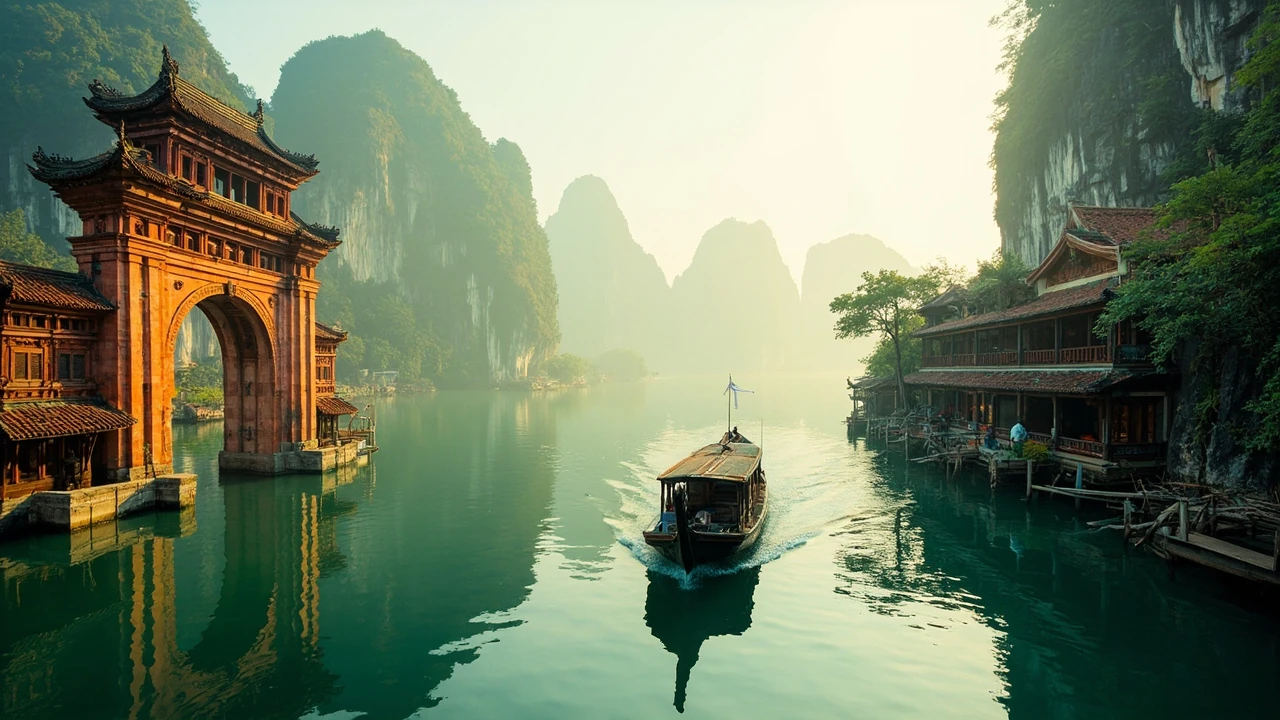
Beyond Hanoi, several alternatives compete for limited travel time. Sa Pa and the Hoang Lien Pass offer mountain scenery, villages, and trekking, although weather can shift quickly. Phong Nha-Ke Bang contains caves, underground rivers, and dramatic limestone terrain; the enormous cave systems require more time than a brief stop. Ha Long Bay and nearby areas such as Lan Ha Bay provide boat travel through limestone islands and karst scenery. These are not interchangeable experiences, so choose based on whether you want mountains, caves, or a cruise.
For most travelers, the best approach is to use Hanoi as a base rather than attempting every northern attraction from the same hotel. Spend two or three nights in the capital, then move to one additional destination. A northern extension works well for travelers with at least seven to nine days in the country. With less time, Hanoi and one nearby day trip are more manageable.
Central Vietnam landmarks: Hue, Hoi An, and the coast reveal different eras
Central Vietnam contains some of the country’s most rewarding Vietnam landmarks, but the major sites are spread across a landscape of coast, river, countryside, and mountains. Hue is the historical center, Hoi An is the atmospheric trading-town destination, and the area around Da Nang adds beaches, marble hills, and access to more dramatic natural sites. Deciding which interests you prevents a frustrating attempt to rush through all three.
The Imperial City in Hue is the essential historical stop. Built as a walled royal enclosure, it contains gates, palaces, temples, courtyards, and tombs associated with Vietnam’s Nguyen dynasty. Unlike a single monument, the complex rewards a slow route through individual gateways and sections. The surrounding city also has significance, including pagodas and historic buildings outside the walls. Most travelers should devote a full day rather than squeezing the complex into a brief stop between other destinations.
Hue’s identity also comes from the Perfume River, local food, and traditional craft culture. A river trip or a visit to a village workshop can provide context for the city beyond the royal complex. These activities should complement rather than replace time in the historic core. Weather, river conditions, and workshop schedules can vary, so treat any specific activity as an option rather than a guaranteed highlight.
Hoi An is best known for its historic trading-port architecture and illuminated streets. The old town contains merchant houses, assembly halls, temples, covered bridges, shops, cafés, and narrow lanes that mix preserved structures with contemporary businesses. Many buildings combine Vietnamese, Chinese, Japanese, and European architectural elements, reflecting the town’s trading history.
The central market and riverside area add another side of Hoi An. Early-morning market visits are best for observing produce, specialty foods, and local activity before the heat builds. Later, explore the historic streets on foot, but expect crowds during the busiest evening hours. Lantern-lit walks can be visually striking, yet they do not replace a daytime visit because the architecture and lane layout are easier to understand when shops and markets are active.
Hoi An also works as a base for countryside attractions such as pottery villages, rice fields, cooking activities, and the historic Cham site at My Son. My Son should be considered more than a photo stop: the sanctuary is a major religious and archaeological complex dedicated to the Cham people, and its meaning cannot be reduced to its silhouette against the hills. The drive from Hoi An takes time, and walking the uneven paths can take longer than expected.
Near Da Nang, the Marble Mountains contain Buddhist sanctuaries, caves, and elevated paths within a limestone formation. The site offers a compact combination of architecture, religious imagery, and views, making it a practical addition to a Da Nang itinerary. Da Nang’s long beach also works well for travelers who want a less demanding day between cultural stops.
| Central Vietnam landmark | Best for | Suggested time | Planning note |
|---|---|---|---|
| Hue Imperial City | Nguyen dynasty history and architecture | One full day | Allow time for multiple sections and heat breaks |
| Hoi An Old Town | Historic trading port, food, and atmosphere | Two days or one overnight | Visit the market early and the old town later |
| My Son Sanctuary | Cham history and archaeological architecture | Half day plus travel | Build extra time for the road and uneven paths |
| Marble Mountains | Religious sites and limestone scenery | Three to four hours | Comfortable shoes make the visit easier |
| Da Nang beaches | Rest and coastal scenery | One or two days | Useful between longer travel days |
A sensible two-week itinerary often pairs two nights in Hanoi with three or four days for northern nature, two nights in Hue, three nights in Hoi An, and several days in Ho Chi Minh City. Even then, the schedule remains active. Central Vietnam landmarks are most enjoyable when the route does not include an unnecessary domestic flight between nearby cities.
South Vietnam landmarks: Ho Chi Minh City, the Mekong Delta, and wartime history
Ho Chi Minh City combines modern energy with historical landmarks that many visitors first encounter at the War Remnants Museum. Other important stops include the former Independence Palace, Notre-Dame Cathedral Square, the central market, and neighborhoods such as Chinatown. The city is more than a stop before the Mekong Delta; it provides a useful base for combining urban history, food, and excursions into southern countryside.
The former Independence Palace, also known as the Reunification Palace, was built in the 1960s and became the presidential residence associated with South Vietnam’s final period of conflict. Its stark modernist structure contrasts with many traditional Vietnam landmarks nearby. Visitors can see preserved rooms and the rooftop and exterior areas used in a defining historical event. The experience can feel heavy, so pair it with a walk through the city rather than treating the site as an isolated attraction.
The War Remnants Museum presents the history of the Vietnam War and its consequences through photographs, equipment, documents, and exhibitions. Because the subject is sensitive and personal, many travelers benefit from allowing more time than they initially expect. The museum is a historical site rather than a recreational attraction. Photography rules and exhibit access can vary, so check current guidance and follow restrictions when photographing displays.
Notre-Dame Cathedral Square and the surrounding streets provide a more architectural contrast. The square has become a prominent gathering place, although access around the cathedral and nearby roads may depend on current city conditions. Saigon’s central market and Chinatown offer a more active urban experience, especially in the morning. Come prepared for busy lanes and negotiate calmly when buying from independent vendors.
The Mekong Delta extends south of the city, with Can Tho, My Tho, and smaller settlements serving as common bases. Floating markets, riverside life, orchards, rice fields, and local food are the main attractions. The famous floating markets are now only part of the experience: many boats also visit processing facilities, workshops, and family businesses, providing a clearer view of how goods move through the region.
Choose a small-group or private boat rather than evaluating only the speed or price of a tour. A slower trip provides more opportunities to talk with vendors and understand how the market operates. The day is often long, with transfers, multiple stops, and a return journey. Travelers with limited mobility should confirm the boarding arrangements and walking requirements before booking.
Other southern Vietnam landmarks include the Cu Chi Tunnels, where visitors can explore a reconstructed section and learn about the tunnel network associated with the Vietnam War, and the southern coastal islands, where beach scenery and marine activities offer a different final phase of a trip. These are separate experiences from a Mekong journey, so avoid placing both into a short itinerary if travel fatigue is a concern.
- City history: Former Independence Palace, War Remnants Museum, Notre-Dame Cathedral Square, and central city architecture.
- Markets and food: Ben Thanh Market, Chinatown, neighborhood markets, restaurants, and cooking experiences.
- Delta life: Floating markets, orchards, riverside workshops, local homes, and regional dishes.
- War history: Cu Chi Tunnels provide context beyond the capital, but require a separate half-day or full-day excursion.
- Coastal relaxation: Southern islands suit travelers who prefer a resort or marine setting after a city-heavy route.
Ho Chi Minh City is also a practical arrival and departure point for international travelers, but using it as the first stop is not always best. Beginning in Hanoi and ending in the south creates a one-way domestic flight that makes the route feel less repetitive. However, travelers with very young children, heavy luggage, or limited time may prefer to reduce domestic flights and use one major city as a base.
How to build a Vietnam landmarks route that does not feel rushed
Start with the number of nights you can genuinely use. A ten-day trip can cover Hanoi, Hue, Hoi An, and Ho Chi Minh City, but it will include several long transfers. Two weeks allow a more comfortable rhythm and room for one natural extension such as Ha Long Bay, Sa Pa, Phong Nha-Ke Bang, or the Mekong Delta. Three weeks make a broader itinerary realistic without requiring daily changes of hotel.
The geography determines the easiest order. A north-to-south route through Hanoi, central Vietnam, and Ho Chi Minh City is efficient because each major transfer moves you onward instead of returning to the same hub. A reverse route works equally well and can be better for connecting international flights. The important point is to avoid unnecessary north-south journeys.
| Approximate trip length | Recommended landmark mix | What to leave out |
|---|---|---|
| 7–9 days | Hanoi, Hue, Hoi An, and Ho Chi Minh City | Extra nature regions and multiple countryside excursions |
| 10–12 days | The four major cities plus one nearby extension | A second distant region reached by another flight |
| 13–15 days | Three regions with one dedicated nature or delta experience | Short stops in every province |
| 16 days or more | A slower route with two well-developed extensions | Unstructured days with no regional base |
Allocate more nights to places that require neighborhood time. Hanoi deserves several days because its major landmarks are interspersed with streets, lakes, markets, and museums. Hue is compact but culturally dense. Hoi An is best experienced across at least one overnight because its atmosphere changes between morning market, daytime architecture, and evening activity. Ho Chi Minh City benefits from time for both history and modern street life.
For every proposed landmark, ask three questions:
- Does it match my main interests? History, architecture, food, nature, and nightlife require different destinations and pacing.
- Is there enough time for a meaningful visit? A photographed stop of thirty minutes is rarely better than a slower day nearby.
- What does the journey cost in time? Transfers, check-in procedures, and missed daylight hours can erase the value of adding another stop.
Use overnight trains or buses for suitable intercity legs when the schedule aligns with your sleep pattern, and domestic flights when the time saving is substantial. The best transport choice is not simply the fastest option. A journey that arrives late but leaves you rested may support a better trip than a daytime flight followed by a rushed sightseeing schedule.
Plan each day around one anchor and one flexible activity. For example, an anchor might be the Hue Imperial City, while the flexible activity could be a riverside walk, a market visit, or a longer meal nearby. This approach gives each day a clear purpose without turning every hour into a scheduled obligation.
Which major Vietnam landmarks fit different types of travelers?
The strongest itinerary depends on personal priorities. Comparing sites by experience is more useful than ranking them on a single scale. A history traveler may find a modest museum more rewarding than a panoramic viewpoint, while a first-time visitor may want a balance of recognizable monuments, scenery, and easy urban access.
| Traveler priority | Best landmark choices | Best region to base yourself | Compromise to avoid |
|---|---|---|---|
| History and architecture | Hue Imperial City, Hoi An, Hanoi temples, Independence Palace | Central Vietnam, then Hanoi | Changing hotels too often |
| Nature and scenery | Ha Long Bay, Phong Nha-Ke Bang, Marble Mountains | Northern Vietnam or Da Nang | Scheduling a boat and a cave system on the same short visit |
| Food and markets | Hanoi Old Quarter, Hoi An market, Mekong Delta, Saigon markets | Two cities plus a delta stay | Booking only luxury restaurants and missing everyday food scenes |
| Family travel | Hanoi, Hoi An, Marble Mountains, safe beach days | Hanoi, central coast, then the south | Remote treks and long cave routes |
| Slow cultural travel | Hue, Hoi An, Sa Pa villages, Mekong Delta | Longer stays in fewer places | A checklist covering all major cities |
Families should consider heat, transfer length, walking surfaces, and the availability of rest breaks. The Marble Mountains involve stairs and uneven surfaces but can be managed with a shorter route. Hue’s imperial complex is expansive, so a focused visit is better than trying to walk every edge. Boat trips and floating markets may be engaging for older children, though safety conditions and boarding arrangements should be checked in advance.
Older travelers often benefit from a route that minimizes long drives. Hanoi and central Vietnam can be combined with generous stops, while a Ha Long Bay cruise can reduce the need for repeated hotel changes if accessibility is confirmed. Private transport can add comfort, but it does not automatically solve traffic delays. Departure times and baggage handling should be discussed before payment.
Solo travelers can build excellent routes around trains and local transport. Hanoi and Hoi An are particularly practical bases because they offer many independent activities, while the Mekong Delta can be explored independently or through a small group. Choose neighborhoods that suit your priorities: central Hanoi is convenient for first-time sightseers, while quieter areas may work better for travelers who value local street life over walking distance to major monuments.
Photography-focused travelers should also consider the light and spatial character of each destination. Hoi An offers architectural details and atmospheric evening scenes; Hue provides monumental walls and pagodas; Hanoi favors street-level observation; the delta emphasizes working waterways and human activity. No single location can satisfy every visual preference.
Practical details that improve visits to Vietnam landmarks
What you wear and carry can affect the experience at temples, tombs, caves, and historic complexes. Lightweight clothing that covers shoulders and knees is useful at religious sites. Comfortable shoes matter more than fashion because historic lanes, uneven archaeological grounds, palace courtyards, and mountain paths can involve substantial walking. Bring a compact rain layer, sunscreen, insect repellent for rural or wetland areas, and a refillable water bottle.
Respect is especially important at war-related and funerary sites. At the Ho Chi Minh Mausoleum, follow photography, clothing, and behavior instructions. At pagodas and tombs, keep voices low and avoid treating worshippers as background elements. At the War Remnants Museum and Cu Chi Tunnels, consider the human cost behind the exhibits before taking photographs.
Transportation deserves separate attention. City buses and ride-hailing services can work well for central districts, but traffic affects travel times. Trains are convenient for many journeys between the capital, central Vietnam, and the south, although schedules and seat classes vary. For remote areas, prearranged cars or organized small-group trips may be more efficient than relying on spontaneous transfers.
Food deserves protection from poor planning. Do not schedule a demanding hike immediately after a long flight, and avoid eating only at the first convenient restaurant. In Hanoi and Ho Chi Minh City, small dining rooms often provide more regional character than a large hotel venue. In Hoi An, ask about local specialties and dietary needs rather than ordering from a generic international menu. In the Mekong Delta, choose operators that explain where ingredients come from.
- Carry: passport, travel documents, cards, a small amount of local cash, water, sun protection, rain gear, and basic health supplies.
- Wear: breathable clothing, modest outfits for temples, and shoes with reliable grip.
- Download: offline translations, maps, copies of bookings, and the contact details for your accommodation and tour operator.
- Check: current entry rules, passport validity, site access, local conditions, weather, and transport disruption before each regional stage.
- Keep: a flexible plan with one open block each day in case of traffic, heat, rain, or a delayed activity.
Keep a simple spending rule. Accommodation, transport, guided excursions, meals, and major admission charges will usually form the largest parts of a trip, but the exact total depends on your route and choices. Reserve limited or remote activities early, and read the cancellation policy. At the same time, leave some decisions flexible so the trip does not become a prepaid series of obligations.
How to prepare for the journey and protect time at the destination
Begin by learning the basics of Vietnamese geography and transport rather than trying to memorize formal addresses. Hanoi is in the north, Hue and Hoi An are in the central region, and Ho Chi Minh City sits in the south. The journey between these regions can take most of a day even when the flight itself is short. A map that looks compact does not reflect travel time.
Build the booking sequence around hard dependencies. International flights and a minimum number of nights come first. Then reserve accommodation in the places where you want more than one night. Add intercity transport, limited-capacity excursions, and any activities with fixed departure times. Leave local tours and optional stops open until closer to the visit.
Check practical information through official or directly responsible providers. Search for current guidance on visa or entry requirements, local weather, trail conditions, boat safety, temple rules, and access to museums or historical sites. Travel advice changes, and a page written years earlier may describe outdated procedures. This is particularly important for Vietnam landmarks that require identification, security screening, reservations, or clothing rules.
Pack for the region rather than for the whole country in one suitcase. Northern winters can be cool, central Vietnam can be hot and humid, and the delta experiences different rain patterns from the coast. Even within one trip, the weight and style of clothing will vary. Laundry services in tourist cities make it practical to pack lighter, but check how quickly your accommodation can return garments before a remote extension.
Give every major stop a purpose beyond taking photographs. Learn how a royal court used space in Hue, understand how Hoi An adapted to international trade, see how Hanoi reflects centuries of change, or learn how floating markets fit into the delta’s food system. A small amount of context makes architecture and landscapes more memorable.
Finally, protect the most engaging days from becoming transit days. If the route contains several flights, place the most demanding sightseeing on a full day after checking in. If two destinations are close enough for a day trip, consider using one as a base instead of moving hotels. The most memorable Vietnam landmarks are not necessarily the ones with the most elaborate visitor centers; they are the places given enough time to reveal their character.
Frequently asked questions
What are the most famous Vietnam landmarks for a first trip?
For a first visit, Hanoi’s Hoan Kiem Lake and Old Quarter, Hue’s Imperial City, Hoi An’s historic trading center, and Ho Chi Minh City’s central historic sites are the most familiar starting points. A bay or cave experience can be added when the trip has enough time. The best route includes only two or three regions rather than every major destination.
How many days are needed to visit the main Vietnam landmarks?
A fast itinerary covering Hanoi, Hue, Hoi An, and Ho Chi Minh City needs roughly seven to nine days, although several days will involve travel. Ten to fourteen days allows a more comfortable pace and one nature, countryside, or Mekong Delta extension. Fourteen days or more makes it easier to explore major landmarks without frequent hotel changes.
Should Vietnam landmarks be visited in the north-to-south order or south-to-north order?
Both directions work. Traveling from Hanoi toward Ho Chi Minh City creates a natural progression through northern, central, and southern Vietnam and often ends with a convenient international departure. Starting in the south works better for some flight schedules. The most efficient plan avoids moving back and forth between the same cities.
Is Hoi An worth visiting for more than one day?
Yes. An overnight stay lets you experience the early market, the historic lanes during daytime, and the illuminated center in the evening. It also makes a quieter morning or a countryside excursion easier to arrange. Many travelers find two days preferable to a rushed overnight stop.
Which Vietnam landmarks are best for travelers with limited mobility?
Hanoi’s central area, the Hue Imperial City, selected museum routes, and parts of central Ho Chi Minh City can be planned around short walks and vehicle transfers. Boat access, uneven temple paths, the Marble Mountains, remote caves, and delta tours require more careful checks. Ask each operator about steps, boarding procedures, seating, and restroom access before booking.
Can I visit Ha Long Bay on a day trip?
A day excursion can show the scenery of the bay, but it compresses travel and sightseeing into one long day. An overnight or longer cruise provides more time on the water and usually a calmer experience. Travelers should check the vessel, cabin, route, accessibility, and cancellation terms rather than choosing only by price.
What is the best time to visit the Mekong Delta?
The delta can be visited in different seasons, with conditions varying by region and rainfall. The most important planning factors are heat, rain, flooding, boat conditions, and the availability of local services. Choose a reputable local operator, confirm current conditions, and avoid a tightly packed day if you want time to observe markets and riverside life.
Are Vietnam landmarks suitable for children?
Many are suitable with careful planning. Hanoi, the Marble Mountains, selected parts of the Imperial City, and boat experiences can work well for families. Allow rest breaks, carry water, and avoid scheduling children for long museum days in high heat. The pace matters more than the number of attractions visited.
Do I need a guided tour to see the main Vietnam landmarks?
Guides are helpful for complex archaeological sites, the Mekong Delta, food-focused market visits, and destinations where language creates a barrier. Independent travel works well in Hanoi, Hoi An, Hue, and central Ho Chi Minh City if you are comfortable navigating local transport and researching bookings. Choose a guide based on local knowledge and clear itinerary terms rather than on the largest group size.
What should I pack for major Vietnam landmarks?
Pack breathable clothing, modest outfits for temples, comfortable walking shoes, rain protection, sunscreen, insect repellent for rural areas, a refillable bottle, and reliable copies of travel documents. Add warmer layers for northern mountains and suitable footwear for boats, beaches, caves, or uneven paths. Regional weather checks should determine the final adjustments.


Leave a Reply