
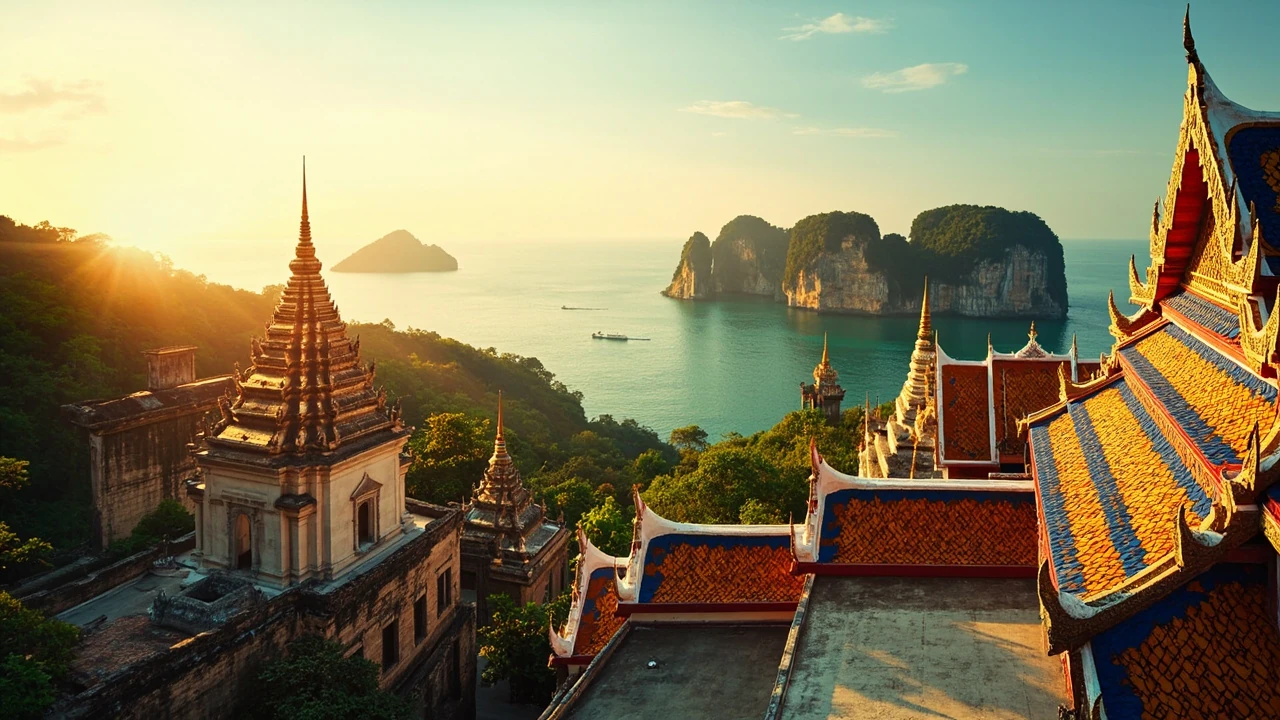
Thailand landmarks by region: how to choose the right stops
A first trip to Thailand can feel surprisingly difficult to plan because the country contains historic temple complexes, royal architecture, working religious neighborhoods, beaches, caves, mountain scenery, and modern commercial districts. Choosing the wrong combination may mean spending several days in a queue, crossing the country between similar sights, or missing the part of Thailand that most appeals to you. The best itinerary depends less on the number of places on a map than on the kind of experience you want: monumental history, local culture, food-focused city breaks, nature, or a combination of them.
This guide compares the most rewarding thailand landmarks by region and helps travelers decide how much time to allow, what to pair with each stop, and when congestion is likely. It focuses on places that work for first-time visitors without treating a checklist as a substitute for good judgment. Access rules, ticketing, transport, and opening arrangements can change, so verify current details with local authorities or your accommodation before departure.
Most travelers benefit from a base-and-day-trip approach. Rather than changing hotels every night, choose two or three bases and make day trips from them. Bangkok is the easiest starting point for central temples and historical cities. Chiang Mai works well for northern culture and mountains. The southern islands suit travelers who want beaches and marine landscapes. A longer itinerary can add Kanchanaburi, Sukhothai, or Khao Sok, but each addition consumes transit time that could otherwise be spent slowing down.
Bangkok landmarks: start with history, not a list of every famous stop
Bangkok contains the country’s best-known concentration of monumental sights, but its scale makes careless scheduling expensive. The Grand Palace and Wat Pho can occupy an entire morning, while Wat Arun is close enough to pair with them on another day. Other landmarks, such as the Golden Mount and the historic riverfront, suit travelers who want a lighter schedule or a broader view of the city beyond its grandest complexes.
The For additional context, Grand Palace complex is the obvious starting point for visitors interested in Thai history and royal architecture. Its scale, decorative detail, and central location make it a reasonable first-day choice, but comfort, heat, and crowds can affect the experience. Wear closed, respectful clothing, carry water, and allow enough time to move through the grounds rather than rushing from one gilded structure to the next.
Wat Pho, immediately nearby, is associated with the traditional Thai massage tradition as well as important temple architecture. The Buddha images are monumental, and the site’s scale can surprise visitors. Combining the palace area with Wat Pho reduces the need for another round of city transit, although doing both in one day can become tiring. A slower alternative is to select Wat Pho for one day and use a later morning or late afternoon for the palace, subject to current access arrangements.
Wat Arun, on the opposite bank of the Chao Phraya River, offers a different perspective. The climb provides views over the river and central Bangkok, but the heat and the number of steps make it more demanding than the initial riverside view suggests. Morning light and cooler conditions generally make the visit more comfortable. Pairing it with a riverside neighborhood and a short museum stop creates a balanced day without crossing Bangkok repeatedly.
| Bangkok landmark | Best for | Plan it with | Main practical issue |
|---|---|---|---|
| Grand Palace | Royal history and ornate architecture | Wat Pho and a late lunch | Heat, crowds, and strict clothing expectations |
| Wat Pho | Temple art and the history of Thai massage | Grand Palace or Talat Noi | A large site that needs more time than expected |
| Wat Arun | River views and a climb | A riverside stroll or museum | Heat, stairs, and ferry or bridge access |
| Golden Mount | A panoramic city view | A quieter central neighborhood | Steep access and exposure to the sun |
| Talat Noi | Street art, old streets, and local food | Chinatown and the river | Busy conditions and limited formal visitor information |
For a first visit, two full sightseeing days are more useful than one frantic day. Keep a third day flexible for a neighborhood market, a museum, or a repeat visit when weather and energy are better. Bangkok’s traffic can turn a short journey into a long one, so compare the time spent in transit with the value of another distant attraction. Staying near a rail or river connection usually creates more flexibility than chasing a short list from opposite ends of the city.
Ayutthaya and Sukhothai: choose the historical city that matches your pace
Thailand’s two best-known UNESCO-listed historical cities are both worth seeing, but they create different trips. Ayutthaya is easier as a day trip from Bangkok and pairs particularly well with Bang Pa-In, the riverside market, and a boat journey. Sukhothai feels more focused on bicycle exploration and a defined historical park. Choose Ayutthaya for travelers who want an active day with a city-like setting; choose Sukhothai for those who prefer a slower landscape organized around temples and cycling.
Ayutthaya’s defining landmarks include Wat Mahathat, where the brick stupa and stone head are immediately recognizable, and Wat Phra Si Sanphet, which offers a different view of the city’s temple landscape. The historical park is spread out, so moving between sites takes time. Bicycles can be practical for many riders, but heat and traffic around the busier entrances may make a tuk-tuk or small local transport option more comfortable for others.
Bang Pa-In is often treated as a quick add-on, but it deserves time. The palace complex has a different atmosphere from the old city, with waterways, gardens, and a collection of buildings developed under several royal periods. It works well after the more demanding Ayutthaya temple route, provided the pace remains relaxed. The floating market, when operating, is also convenient to the northern side of the city and can be combined with the trip without requiring a return to central Bangkok.
Sukhothai is best understood as a historical landscape rather than a single monument. The central park contains major temples, including Wat Mahathat and Wat Si Sawai, while bicycle routes connect smaller sites and rural landscapes. Morning visits often feel calmer because the park is extensive. Staying overnight allows travelers to visit at a slower pace and return to nearby Sukhothai Historical Park in the early morning or late afternoon.
| Decision point | Ayutthaya | Sukhothai |
|---|---|---|
| Best base | Bangkok for a day trip, or one night for a slower visit | One or more nights beside the historical park |
| Main advantage | Easy access from Bangkok and more varied stops nearby | Concentrated historical atmosphere and bicycle exploration |
| Main drawback | Heat and long walks between scattered monuments | Additional transport from Bangkok and less variety nearby |
| Best activity | Temple hopping, Bang Pa-In, and a market visit | Cycling through the park and visiting smaller temples |
| Ideal stay | One overnight visit | Two nights for a relaxed rural itinerary |
Do not treat Ayutthaya and Sukhothai as interchangeable checkboxes on a northern route. Connecting both can be worthwhile when travelers have enough time, but a rushed visit to each may deliver less than a slower stay around one. Travelers who also want northern mountains can route through Sukhothai toward Chiang Mai, although that decision should be based on available days rather than the number of landmarks visible on a map.
Chiang Mai landmarks and Doi Suthep: balance the city with the hills
Chiang Mai has a gentler rhythm than Bangkok and provides a useful base for northern Thai culture. The old city contains hundreds of temples, so the challenge is selecting a meaningful group rather than attempting to visit every one. Wat Phra Singh, Wat Chedi Luang, and Wat Chiang Man offer a varied introductory circuit. The city also has markets, cafés, craft traditions, and cooking schools that make it worthwhile even for travelers who do not want a packed monument schedule.
Doi Suthep, reached by road and then a staircase, is the signature mountain landmark outside the city. The temple complex sits above the city, and the approach creates part of the experience. A car or songthaew can reduce the difficulty of the climb, although the road journey may feel crowded at busy times. The return journey gives a broad view of the Chiang Mai valley, which helps explain the city’s geography and its relationship with the surrounding mountains.
Do not treat the temple as a standalone half-hour attraction. The trip usually takes much of a day once travel, entrance, traffic, and time at the site are included. Morning visits are commonly calmer, while late-day visits may offer cooler conditions and views of the city lights. Weather can affect the mountain experience dramatically, so travelers should check conditions locally and avoid treating a clear day in the city as a guarantee of clear conditions at the elevation.
Other northern landmarks can suit specific interests rather than a general checklist. Wat Umong is linked with forest paths and meditation. The Royal Flora Ratchaphruek complex provides a different architectural and garden setting. The Mae Sa Valley and nearby waterfalls offer greenery and outdoor activity but require a private vehicle or local transport arrangement. For history-focused travelers, museums in the city can provide context for the Lanna kingdoms that shaped the region.
- For a short city stay: Visit two or three central temples, spend time in the old city, and add Doi Suthep as a full-day outing.
- For a slower cultural trip: Add one smaller temple or a meditation-oriented site rather than racing through a long list.
- For outdoor travelers: Build in the Mae Sa Valley or another mountain excursion and allow time for weather changes.
- For food-focused visitors: Reserve a morning for markets or a cooking class so landmark visits do not consume the entire day.
Chiang Mai works best with an overnight stay of at least two nights. A single day can cover the old city and Doi Suthep, but it is a rushed sample. Two or three nights allow travelers to place mountain scenery, temple interiors, markets, and food experiences on different days. That separation also makes the itinerary more resilient when rain affects the hills.
Southern island landmarks: Phuket, Krabi, and Koh Samui are not interchangeable
Thailand’s southern landmarks are often divided into two broad experiences: limestone coastlines around Phuket and Krabi, and island resorts around Koh Samui. Both are beautiful, but they suit different travelers. Phuket combines beaches, historic streets, viewpoints, and easy transport links. Krabi emphasizes dramatic limestone formations, climbing, kayaking, and island trips. Koh Samui offers beaches, elevated inland scenery, wellness travel, and a more resort-oriented atmosphere.
Phuket’s Old Town contains Sino-Portuguese architecture, Chinese shrines, cafés, and market streets. It provides a useful contrast to the beaches and large resort areas elsewhere on the island. Promthep Cape is a popular coastal viewpoint, but drivers should not treat a stopped vehicle as a safe place to explore. Boat Island, reached from Phuket by ferry, is another landmark choice for travelers who want offshore scenery rather than another busy beach.
Railay and Tonsai in Krabi deliver the area’s most distinctive scenery. Railay is framed by limestone towers and is known for rock climbing, while Tonsai has a more relaxed beach and village character. Boat journeys add long stretches of open water and stops on accessible islands, so travelers prone to seasickness may want to prepare for the conditions rather than judging the destination only by the photographs taken on shore.
The For additional context, BBC travel guide to Thailand from a Bangkok-born actor highlights Phuket, Koh Samui, Bangkok, and nearby islands as distinct parts of a Thai journey. Its emphasis on beaches, food, wellness experiences, and different island atmospheres is useful for travelers deciding how to divide their time. It also reinforces a broader point: choosing one coastal base is often more rewarding than attempting to cross between the Andaman coast and the Gulf islands during a short vacation.
| Southern destination | Strongest draw | Best for | Watch for |
|---|---|---|---|
| Phuket | Beaches, Old Town, coastal viewpoints, and varied activities | First-time visitors who want options and straightforward connections | Traffic and the contrast between resort districts and quieter local areas |
| Krabi | Limestone cliffs, Railay, Tonsai, and boat trips | Active travelers, climbers, kayakers, and scenery seekers | Long boat transfers and outdoor activity that depends on conditions |
| Koh Samui | Beaches, viewpoints, waterfalls, resorts, and wellness retreats | Couples, families, and travelers who want to base themselves in one coastal setting | Island transport can add time to day trips |
| Phi Phi | Dramatic island scenery, snorkeling, and marine tourism | Short active visits with an emphasis on the water | Day-trip crowds, boats, and a limited need to stay overnight |
Koh Samui is a common choice for a resort holiday and works particularly well when the priority is rest. Beachfront properties place travelers close to the coast, while inland attractions require additional driving. Older temples, viewpoints, waterfalls, and markets provide alternatives on hot or rainy hours. A planning mistake is assuming that every island attraction is a short walk from the beach; a car or local driver can make a substantial difference in a full-day itinerary.
Phi Phi is best treated as a destination rather than merely a day trip when time allows. The two main islands are developed around steep terrain, and viewpoints can require a climb. Staying overnight also gives travelers access to a different rhythm than the arrival and departure crowd. Regardless of location, boats can be affected by weather, so the return schedule should leave room for adjustment rather than assuming every outing runs exactly to plan.
Choosing between Thailand’s major landmark regions
The most useful comparison is not a ranking from best to worst. It is a match between the traveler’s priorities and the practical demands of each region. Bangkok offers the largest concentration of internationally recognized monuments, but it also demands planning around traffic, crowds, and heat. The historical cities provide more breathing room and a stronger focus on ruins and temple landscapes. Chiang Mai combines cultural sites with mountains, while the southern coast specializes in marine scenery and beach-based travel.
| Travel priority | Best regional base | Landmark combination to consider | Time to protect |
|---|---|---|---|
| First taste of Thailand | Bangkok | Grand Palace, Wat Pho, Wat Arun, and one neighborhood day | Three to four days |
| Ancient history | Ayutthaya or Sukhothai | One historical city plus Bang Pa-In or a slow second park day | Two to three days |
| Culture and mountains | Chiang Mai | Three central temples, Doi Suthep, and a market or class | Three to four days |
| Beaches and scenery | Phuket, Krabi, or Koh Samui | Old Town, coastal viewpoints, and one boat or inland excursion | Four to seven days |
| Nature and wildlife | Khao Sok or another conservation-focused base | Water-based exploration, forest trails, and a nearby cave or coast | Two to three days |
A two-week itinerary can combine two regions rather than four. For example, Bangkok and Ayutthaya work well together, as do Bangkok and Chiang Mai when air travel is used. Chiang Mai and the historical city of Sukhothai can form a northern road or rail journey, though slower transport changes the experience. Phuket and Krabi can share a trip, but travelers should avoid moving hotels too often within the pair.
- Two to four days: Choose Bangkok plus one nearby day trip, or commit to a single island region.
- Five to seven days: Combine Bangkok with Ayutthaya, or select Chiang Mai and one northern extension.
- Eight to twelve days: Use air travel to connect Bangkok with Chiang Mai or the southern coast.
- Two weeks or more: Build in weather buffers, rest days, and no more than two major regional bases at once.
Travel time is not just a number of hours in a planner. Airport procedures, station transfers, boat waits, heat, and unfamiliar road systems add friction. A route that looks efficient on a map may leave too little time at the destination. The most comfortable itineraries keep one long transfer in the middle of the trip and place major sightseeing on either side, rather than changing locations every two days.
When to visit each region: match the season to the route
Thailand’s seasons differ by region. The Andaman coast around Phuket and Krabi generally has a clearer and drier period during the northern winter, while the Gulf coast around Koh Samui has a different rainy-season pattern, with heavy rain possible during the northeastern monsoon. Northern Thailand is often pleasantly cool around the northern winter, but cold nights and mountain conditions can occur. Central Thailand also varies between a hotter, wetter period and a cooler, drier one.
This difference matters when choosing islands. Travelers who want reliable beach and boating conditions around Phuket may prefer the Andaman coast’s drier season. Koh Samui can be appealing during that same period, but the Gulf may also receive substantial rainfall, so a specific week does not guarantee beach weather. The best approach is to compare the Gulf and Andaman coasts instead of treating Thailand as one weather zone.
Songkran, the Thai New Year celebration associated with water pouring and major public festivities, occurs around 13 to 15 April. It can be a vivid cultural experience, but travelers seeking quiet sightseeing may prefer to avoid the largest festival period. Wat Pho may also have a different character during the holiday, with ceremonial bathing and temporary activity around the Buddha image. Expect heavier transport demand and more crowds around popular central sites.
Heat is an important factor outside the cool season. Temple courtyards often have little shade, and walking distances can be deceptive. Start major outdoor complexes early, carry water, and use midday hours for a meal, museum, market, or rest. This is more effective than trying to squeeze another distant landmark into the hottest part of the day.
| Planning situation | Smartest choice | Reason |
|---|---|---|
| December to February | Northern cities, Bangkok, and the Andaman coast | Cooler northern conditions and a generally drier western coastal pattern |
| March to April | Central and northern Thailand | Hot conditions intensify, and Songkran brings festival crowds around mid-April |
| May to October | Flexible routes with indoor and short-outdoor stops | Rain is more likely in many areas, though conditions vary by region |
| September to December | Compare the Gulf and Andaman coasts carefully | The Gulf is often wetter while the Andaman coast can offer better boat and beach conditions |
Public holidays can have a major effect on crowds, even when the weather is ideal. The dates of major national and religious observances shift between the Gregorian and Thai calendars, so travelers should check a current official calendar rather than rely on a fixed date from an old itinerary. Booking lodging and boat tours early is sensible around the best-known festivals and the New Year period.
Practical planning guide for visiting major sites
Reliable logistics make a landmark-focused trip much easier. Start by identifying the hours available in each city, then reserve the most demanding activities for the days with the best weather and energy. Do not schedule a long boat trip and a major hilltop visit on the same day. Similar tasks, such as two museums or two large temple complexes, also work better on separate days.
Clothing and behavior matter at religious sites. Shoulders and knees should be covered at major temples and other places where posted rules apply. Shoes are generally removed when entering certain buildings. Visitors should not climb on statues, pose disrespectfully, or block worshippers for photographs. A lightweight scarf or sarong-style covering can provide flexibility, but it should be carried discreetly and used according to local instructions.
Carry a small amount of cash for small vendors and transport, while using a card or reputable payment service where widely accepted. Keep digital copies of travel documents and insurance details. For remote sites, confirm the return time of a driver or boat, especially when weather or traffic could cause delays. Local guides can be particularly useful at large temple complexes and historical parks because their explanations reveal details that signage may not cover.
- Before arrival: Check official site information, current entry rules, seasonal weather, and local holidays.
- Each morning: Identify one primary landmark and one nearby secondary stop rather than a long transfer-heavy list.
- At the site: Follow posted photography, clothing, and worship rules, and keep voices low where requested.
- Before leaving: Carry water and confirm the next transport, especially for boats, rural roads, and mountain routes.
For travelers comparing the idea of one country with many destinations, the landmarks in Ecuador offer a useful reminder that national identity can be experienced through several distinct environments. Similarly, Moscow’s scale beyond Red Square shows how one iconic monument can represent only a fraction of a destination. The same principle applies in Thailand: the Grand Palace does not stand in for Bangkok’s food markets, the beach does not represent the entire southern coast, and a temple visit does not replace time in a living neighborhood.
How to build a balanced Thailand landmark itinerary
A strong itinerary contains a clear hierarchy. One or two sites receive prime time, secondary sights share nearby days, and neighborhoods provide the space between landmark visits. This prevents a vacation from becoming a checklist in which every hour is consumed by a monument. It also leaves room for markets, cafés, beaches, viewpoints, and unplanned walks, which are often what travelers remember most clearly.
Start by selecting the region that matches the strongest interest. If the trip’s purpose is history, spend more time in Ayutthaya or Sukhothai than on a rapid island transfer. If food and city energy are priorities, base yourself in Bangkok and treat major monuments as one part of each day. If relaxation is the main goal, choose one southern base and add no more than two organized excursions per day. If photography, wildlife, or active exploration drives the trip, favor destinations where the landscape is part of the attraction.
Then protect the most important experience from predictable mistakes. Visit large complexes in the morning, leave a buffer after long transfers, and avoid changing hotels every two nights. Keep one flexible half-day open for weather, fatigue, or a place that proves worth more time than expected. This is especially important during the April festival period and on island routes affected by rain or seas.
| Time available | Recommended structure | Landmarks to prioritize | Avoid |
|---|---|---|---|
| 3 days | Bangkok base with one excursion | Grand Palace, Wat Pho, Wat Arun | Attempting a northern or island extension |
| 5 days | Bangkok plus Ayutthaya | Central temples and one full historical-city day | Adding Chiang Mai by road |
| 7 to 9 days | Bangkok and Chiang Mai by air | Central temples, Ayutthaya, Doi Suthep, and northern temples | Unnecessary backtracking between cities |
| 10 to 14 days | Two regions with a clear transfer | One historical city, one northern or coastal region | Four bases and a packed final week |
Budgeting should reflect the type of landmark visit rather than a generic attraction allowance. A large historical park may require bicycles, local transport, food, and guides. An island trip may add a boat fare, national park fee, equipment, and a weather-related buffer. A temple in the center of Bangkok may be free to enter while still requiring transit, clothing, and time. Check current official fees rather than carrying assumptions from another destination or an older guide.
The best itinerary is one that still feels possible on a tiring day. A long list of famous places can create pressure to keep moving even when a slower schedule would produce a better trip. By selecting a regional theme, grouping nearby sights, and leaving room for ordinary travel experiences, travelers can see some of Thailand’s finest landmarks without reducing the country to a sequence of photographs.
Frequently asked questions
What are the most famous Thailand landmarks for a first visit?
For a first trip, the Grand Palace and Wat Pho in Bangkok are the strongest starting points because they offer an immediate view of the capital’s royal and religious history. Wat Arun adds a riverside setting and a climb, while Ayutthaya provides a full-day historical excursion. Travelers with more time can add Chiang Mai’s old-city temples and Doi Suthep or choose a southern beach and limestone coastline.
How many days are needed to see Thailand’s main landmarks?
Allow at least three days for central Bangkok alone. Four to seven days enables Bangkok plus Ayutthaya or a flight to another region. A two-week itinerary can comfortably combine the capital with either northern or southern Thailand. The key is to avoid treating every attraction as equal: one complex can take several hours, while a neighborhood visit may require only a morning.
Is Ayutthaya or Sukhothai better for a history-focused visit?
Ayutthaya is easier from Bangkok and offers a lively historic city with additional stops such as Bang Pa-In. Sukhothai is more focused on a historical park and is especially rewarding with a bicycle and an overnight stay. Choose Ayutthaya for easier access and a fuller day; choose Sukhothai for a slower immersion in one defined landscape.
Should a first-time visitor choose Phuket or Koh Samui?
Choose Phuket for beaches, Old Town architecture, viewpoints, and a wider range of excursions. Choose Koh Samui for a resort-style stay, wellness experiences, and a more relaxed single-base trip. Both can be excellent, but travel between them may consume time that could be used for the Andaman coast, Gulf coast, and nearby island scenery. Check the seasonal rainfall pattern before selecting a beach base.
Do travelers need a guide for Thailand’s major temples?
A guide is optional at many central sites but valuable at large historical parks, less familiar temples, and destinations where architectural or religious history adds context. Guides can also help navigate transport and identify which parts of a sprawling complex deserve more time. At famous urban landmarks, visitors who mainly want photography may prefer independence. The decision depends on how much history they want to understand and how complex the site is.
What clothes should I wear when visiting temples in Thailand?
Wear clothing that covers shoulders and knees, and bring a lightweight layer or scarf for quick adjustments. Shoes generally come off for indoor temple areas where signs or guides indicate this. Avoid clothing with disrespectful religious or political messages. Because rules can vary by site, observe posted instructions and follow directions from staff rather than relying only on general travel advice.
Are Thailand’s landmark sites suitable for children?
Many are, provided the itinerary includes breaks and avoids overloading each day. Bangkok’s Grand Palace and Wat Pho involve substantial walking and heat, while boat trips and historical parks offer more varied engagement for children. Shorter visits, snacks, shaded breaks, and one active experience per day usually work better than trying to complete a full adult checklist. Adjust the pace to the youngest traveler.
How crowded are Thailand’s most popular landmarks?
Crowding varies by site, season, and time of day. The Grand Palace, Wat Pho, popular island piers, and beach areas can be especially busy, while smaller temples and less famous historical sites may be calmer. Visit large complexes early in the day, avoid the most obvious lunch-hour window where possible, and allow extra time for entry procedures. Current local conditions matter more than a fixed expectation.
Can I visit Thailand’s main landmarks during the rainy season?
Yes, but the route should adapt to regional conditions. Rain can interrupt boat journeys, make temple courtyards slippery, and create long traffic delays. Build in spare days, keep indoor museums and markets in the itinerary, and check forecasts before outdoor excursions. The Gulf and Andaman coasts have different seasonal patterns, so compare conditions for the specific destinations rather than applying one national forecast.
What is the best way to travel between Thailand’s landmark regions?
Air travel is usually the most time-efficient option between Bangkok, Chiang Mai, and the southern destinations. Trains or road transport can suit travelers who prefer a slower journey and have a manageable schedule. Within a region, local transport, boats, and short day trips are often more practical than long intercity moves. Avoid booking a landmark immediately after a long transfer unless the activity is flexible and close to arrival.

Leave a Reply