
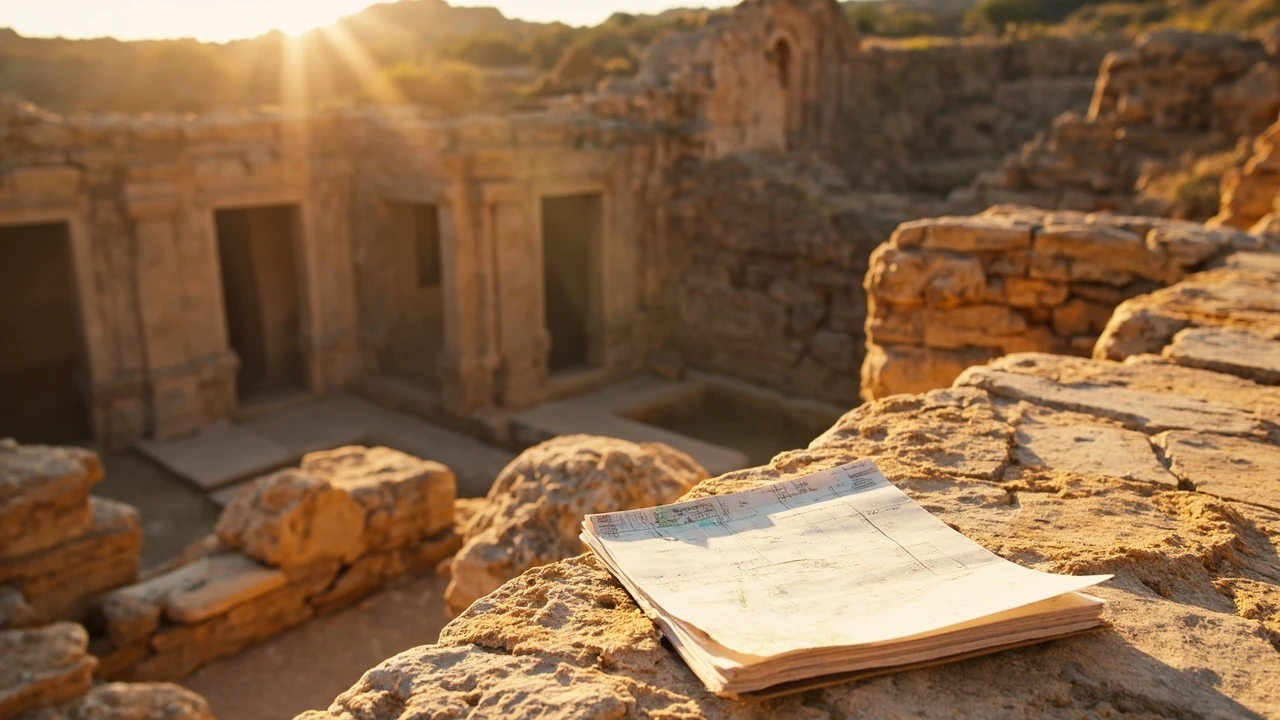
Roman ruins: what visitors are actually seeing
A weathered wall, a row of foundation stones, and a collection of columns beside a modern road may look like little more than broken stone until someone explains what happened there. That missing context is where many trips to roman ruins begin. A useful visit depends less on finding the most dramatic photograph and more on understanding what survives, why it survived, and what the site can still tell you.
For travelers from the United States, this distinction is especially useful. Roman-era remains are concentrated in Europe and the Mediterranean, so a trip often combines a flight, local transportation, and several hours on foot. At the same time, American museums and recreated Roman environments can introduce the architecture before a visitor reaches the original ruins. The goal is to arrive with clear questions rather than a fixed image of what the site should look like.
This guide focuses on one task: how to understand and plan around Roman ruins as an archaeological destination. It explains how to distinguish an ancient remnant from a modern reconstruction, why a single visible feature can be misleading, how sites with different histories reward different kinds of attention, and what practical questions to resolve before leaving the United States.
It also uses the archaeological complex at Tróia in Portugal as a detailed example. Tróia is not the only place to see Roman ruins, and it should not be treated as a universal model. It is useful here because the site contains industrial, domestic, religious, and funerary remains in one place. That variety makes the limits of any single structure clear: a bath is not a city, a mosaic is not a whole neighborhood, and an impressive monument may tell a very different story from the buildings around it.
How to read a site before you visit
Most ruins are experienced in fragments. Walls are preserved to different heights, roofs have disappeared, floors may be buried, and modern paths often follow practical needs rather than ancient streets. A good visitor learns to ask what each fragment represents and how confidently that interpretation is known.
Start with the site’s original purpose. A civic center, villa, port complex, mine, bathhouse, military camp, and necropolis each served different people. The purpose also shapes the remains you are most likely to see. Industrial sites often have repeated tanks, workrooms, drainage channels, and storage areas. Residential ruins may show individual houses with small courtyards. Bath complexes tend to include several rooms with different temperatures, while burial grounds may contain graves, monuments, and collective burial structures rather than domestic rooms.
Next, establish the date range without treating every structure as the same age. Sites are often occupied, rebuilt, abandoned, reused, and excavated over long periods. A visible layer may represent a later phase of a much earlier settlement. This is why a general label such as “Roman” is useful for orientation but rarely the end of the explanation.
| Feature at the site | What it may represent | What to look for | Common misconception |
|---|---|---|---|
| Foundation plan | Rooms, streets, workshops, or service areas | Repeated wall lines, entrances, drains, and changes in building material | Every aligned stone belonged to one original building |
| Columns or capitals | A public, residential, or religious structure | Placement, scale, nearby walls, and whether the pieces remain upright | The tallest surviving feature was the site’s most important building |
| Mosaic or painted floor | A decorated interior used for display, status, or daily activity | Room dimensions, access points, and signs of later phases | A decorative floor describes the whole surrounding district |
| Water system | Processing, sanitation, heating, storage, or supply | Channels, tanks, outlets, gradients, and connections between rooms | All water installations served the same purpose |
| Burial remains | Individual or collective funerary use | Location, orientation, grave types, and relationship to settlement areas | A burial area can be dated only from the surrounding city |
Pay attention to the difference between what is visible and what has been reconstructed. Some archaeological sites use modern materials or partial supports to show where a column, roofline, or wall once stood. Such work can make a plan legible, but it is not the same as an original ancient surface. High-quality interpretation generally distinguishes between original fabric, conserved material, and modern additions; use that distinction when deciding what an image represents.
Condition also matters. A ruin may be exceptionally significant but difficult to interpret because important surfaces remain underground. Another site may be visually sparse while its excavated plan reveals a sophisticated water system or industrial organization. The amount of intact decoration is not a reliable measure of historical value.
Finally, consider the site as a document with layers. Excavation is not complete by default, and a site may remain partly buried or restricted. Construction, flooding, farming, urban growth, tourism, conservation work, and previous archaeological campaigns can all affect what visitors encounter. The most accurate interpretation is the one that acknowledges those layers rather than presenting a single moment as the site’s entire life.
What the Tróia complex reveals about Roman ruins
Tróia offers a useful case because it is not simply a monumental city center. The For additional context, archaeological complex at Tróia preserves evidence of fish processing, bathing, residence, and burial in an area shaped by the Sado estuary. Its remains date from the first through the sixth centuries CE, while its wider importance rests in the connection between coastal resources and trade across the Roman Empire.
The industrial side of the site is especially instructive. Archaeologists have identified twenty-five workshops containing a total of 182 salt-processing tanks. The workshop sizes varied substantially: the largest covered more than 1,000 square meters and grouped nineteen tanks, while the smallest covered 135 square meters and contained nine. Those numbers reveal organization rather than a collection of isolated pits. Rooms were grouped into working units, and the facility was designed around the repeated handling of fish and salt.
This is why context can be more revealing than the objects that first catch attention. Amphorae, dolia, pottery, tanks, and channels each tell only part of the story. Together, they show a production system shaped by the estuary’s resources. Fish were processed and preserved, and products such as salted or pickled fish and fish sauces moved through imperial trade networks in purpose-built containers.
The baths show another kind of change. The complex occupied about 450 square meters and included a sequence of spaces associated with undressing, cold bathing, graduated warming, and hot bathing. It also had pools and an exercise room, while an underground system supported heating. The arrangement provides physical evidence for the transition between temperatures and for the social routines attached to bathing. It also demonstrates why Roman ruins should not be reduced to a checklist of famous architectural forms.
Burial zones add a further layer. The site includes a mausoleum with a columbarium whose wall niches held urns containing cremated remains. Archaeologists have also identified graves that may date to the later fifth century CE, along with a paleochristian basilica built over an abandoned workshop. These features indicate both continuity and transformation. A new religious building occupied the footprint of an earlier industrial area, while changing funerary practices appeared within a landscape long associated with Roman administration and commerce.
| Area of Tróia | Evidence preserved | What it reveals | Reader takeaway |
|---|---|---|---|
| Fish-processing complex | Workshops, salt-processing tanks, amphorae, dolia, and pottery | Coastal resources were organized for large-scale production and imperial trade | Repetition and layout can reveal an economy more clearly than a single decorated object |
| Thermal baths | Apodyterium, frigidarium, tepidarium, caldarium, pools, exercise room, and underfloor heating | Bathing involved specialized rooms, temperature changes, and social activity | Read connected spaces as a system rather than isolated decorative features |
| Residential areas | Housing associated with workers and factory owners | Production sites included people with different social and economic roles | Domestic spaces can provide context for labor and administration |
| Burial and religious areas | Graves, mausoleum, columbarium, and basilica | Religious and funerary practices changed over time | A Roman-period site may contain more than one historical phase |
The documented history of investigation at Tróia also illustrates how archaeological knowledge develops. Records mention the ruins by the sixteenth century, but major organized study came later. Excavation activity accelerated with the creation of the Lusitanian Archaeological Society in 1850, and further campaigns between 1948 and 1967 clarified the baths, salting houses, necropolis, and basilica. More recent work has continued under archaeological supervision. The visible site is therefore the result of changing research methods and conservation priorities, not a single untouched moment.
Choosing a Roman ruin site by evidence, setting, and interest
Once you understand how a site preserves evidence, you can compare destinations more effectively. The best choice is not always the site with the largest number of standing columns. Consider what you want to learn and how much context the site provides.
For travelers who want to understand Roman economy, prioritize industrial or commercial sites where workshops, storage vessels, roads, and ports remain connected. For architecture, a city with several civic building types may offer more than a single famous complex. For domestic life, look for houses with visible room plans, floors, courtyards, and household installations. Religious sites require careful interpretation because temples, basilicas, shrines, and funerary monuments served different communities and changed over time.
Set aside time for context beyond the excavation itself. A coastal industrial site teaches about landscape and trade. A hilltop or rural settlement may explain roads, terrain, and the placement of farms or villas. An urban archaeological area offers the complication of later construction: Roman buildings may sit beneath medieval streets, modern neighborhoods, or other layers. Those comparisons are not distractions if you know why they are there.
- Choose an industrial site when your main interest is production, trade, labor, or the relationship between resources and transport.
- Choose a civic and residential city when you want to compare public buildings, private houses, streets, and changing urban patterns.
- Choose a bath or spa complex when you are interested in technology, heating systems, social customs, and the design of specialized rooms.
- Choose a funerary site when you want to study burial practices, commemoration, religion, and the relationship between living communities and the dead.
- Choose a reconstructed environment when accessibility and interpretation matter more than the original archaeological fabric, but treat it as a museum experience rather than an excavated ruin.
Distance and travel time matter too. A day trip from one base can provide a focused visit; adding several distant sites may consume more time in transit than at the ruins. Map the sites before choosing lodging. Check whether two attractions are genuinely complementary or whether one can be explored more thoughtfully on its own.
Accessibility is another legitimate criterion. Uneven surfaces, stairs, narrow passages, heat, and limited shade can affect how much of a site you can enjoy. Ask the official site about current paths and visitor facilities, and build extra time into a visit that requires a longer walk. A plan that respects physical limits is more useful than a checklist that promises five buildings in two hours.
Finally, think about interpretive quality. Good signage should distinguish what is known, what is inferred, and what has been reconstructed. A useful map should show the site’s phases rather than only the most photogenic remains. Visitor centers, museum displays, and guided tours can provide the vocabulary needed to understand what you see, but use them to frame the ruins rather than replace direct observation.
Planning a Roman ruins trip from the United States
International travel requires more preparation than a domestic outing, especially when the main objective is an archaeological site. Start with the site rather than the destination. Choose one or two places that answer the questions you care about, then build the trip around them.
Use a three-stage planning process:
- Select the evidence. Decide whether you want to study architecture, daily life, industry, religion, or the development of a settlement over centuries. Use that choice to identify sites with relevant remains.
- Build the local sequence. Combine the archaeological visit with nearby museums, historic centers, landscape features, or another site that provides context. Leave enough time between arrival and the visit for ordinary travel delays.
- Confirm the practical details. Check official information for dates, access, ticketing, guided tours, transport, and any restrictions affecting the area you plan to visit. Policies can change, so verify them close to departure rather than relying on an old travel post.
Seasonality should follow the site and the experience you want. Warm weather makes long outdoor walks easier, while cooler periods may suit dense archaeological settings. Crowds can be heavier during school holidays, holidays, and peak sightseeing months. At exposed coastal or rural sites, wind and sun can make a two-hour visit feel longer. At crowded monuments, an early arrival often creates more space for careful observation, though current opening procedures must always be checked.
Build a realistic visit length. A large open-air site may require several hours, especially when you want to read signs, follow the plan, and compare different phases. A compact archaeological area can be thoroughly explored in less time. The amount of exposed walking matters as much as the number of highlighted buildings.
Before leaving home, make a compact research card for each site:
- The site’s main period of occupation and any later phases
- Its original function and the activities that occurred there
- Three features visible on the ground
- One historical question the site can answer
- One point of uncertainty or ongoing interpretation
This small exercise prevents a common problem: collecting photographs without knowing what they show. It also makes a guided visit more rewarding because you can compare the guide’s explanation with features you already noticed.
For broader ideas about constructing a destination around notable places, the site’s guide to landmarks in Ecuador illustrates how major sights can be matched with a wider route. Timing also requires a destination-specific approach; the best time to visit Portland depends on what the traveler hopes to do. The same principle applies overseas: the best time for Roman ruins is the period that gives you comfortable access to the site and the fewest conflicts with the rest of your itinerary.
What to bring and how to read the signs
Your equipment should support observation rather than distract from it. Comfortable footwear matters because archaeological surfaces can be rough, while paths may cross gravel, grass, steps, or exposed stone. Sun protection is essential at open sites. A refillable water bottle, a small amount of food, and a compact first-aid kit are sensible additions, but local rules and visitor guidance should take priority.
Carry a notebook or use your phone to record observations without filling the screen with photographs. A three-column method is effective:
- Observe: Record the feature, orientation, materials, and immediate setting.
- Question: Ask what activity the feature supported and what evidence supports that interpretation.
- Compare: Check the plan, sign, museum display, or guide to see whether the interpretation changes over time.
Learn a small set of architectural terms before the visit. For example, an apse, ambulatory, hypocaust, columbarium, opus, or mosaic pavement can narrow the search for what a room was intended to do. Learning terms does not require memorizing a glossary; several functional terms are usually enough to make labels understandable.
| Useful term | Plain-language meaning | What it can help you recognize |
|---|---|---|
| Apodyterium | A room associated with undressing before bathing | The sequence and organization of a bath complex |
| Hypocaust | A system that circulated heated air beneath a floor | Evidence of engineered heating and room function |
| Columbarium | A structure with niches for funerary urns | Collective burial practices and commemorative design |
| Mosaic | A decorative surface assembled from small pieces | Interior decoration, status, and the function of the room |
| Archaeological plan | A measured representation of surviving walls and features | Room relationships, earlier phases, and missing structures |
Photograph responsibly. Wide views record the relationship between features, while close views capture materials and construction details. Do not climb on fragile walls or place equipment beyond barriers. If the surface is already worn, an extra footprint or camera strap can damage evidence that no reconstruction can replace.
Consider a local guide when the site is complex, the signage is limited, or the remains are difficult to distinguish. A good guide can explain the sequence of excavation and the relationships between structures. Ask questions rather than treating the tour as a performance: why was this feature preserved, what was found nearby, which interpretation changed, and which part of the site remains uncertain?
Finally, separate sight from interpretation. The most memorable object may be easy to photograph, while a drainage channel, workroom, or ordinary house can explain the site’s operation better. The strongest understanding combines both. Keep the dramatic feature, but also look for the connections that made it possible.
Common mistakes that weaken a Roman ruins visit
Most disappointing visits do not result from choosing the wrong site. They result from expecting the wrong evidence, rushing the available evidence, or treating one interpretive layer as final.
Confusing height with importance. A tall reconstructed column attracts attention, but a modest workshop may reveal more about how a community operated. Roman ruins reward close reading, not just a search for the biggest silhouette.
Assuming every visible feature is original. Some structures are restored, stabilized, partially rebuilt, or marked by modern supports. Ask what is ancient fabric and what serves conservation or interpretation. This does not diminish the site; it makes the evidence easier to understand.
Reading one date for an entire location. Long occupation means that a theater, wall, house, and burial area may belong to different generations. A site plan with dates can prevent you from assembling a history that never existed at one time.
Ignoring the surrounding landscape. Ancient cities depended on roads, water, agriculture, ports, and terrain. A Roman ruin in Portugal may make more sense when viewed beside its estuary, while a rural villa may be easier to interpret through its relationship to roads and cultivated land.
Scheduling too many monuments. Travel days and tightly timed reservations can make a visitor focus on checking off buildings instead of understanding them. Two well-chosen sites usually produce more insight than a rushed chain of six.
Relying on unsourced visitor information. Old photographs, copied itineraries, and undated advice can misrepresent access or suggest that a closed area is open. Use official site and local authority information for current conditions, and confirm important details shortly before the visit.
Treating guides as authorities on every question. Interpretation can change as excavation continues. A careful guide should distinguish established evidence from a plausible proposal. If a detail remains debated, it is reasonable to leave that point open.
A final mistake is assuming that understanding Roman ruins requires an archaeology background. It does not. Curiosity, attention to plan, and a willingness to separate visible evidence from interpretation are enough to begin. The sites become more rewarding when visitors ask precise questions rather than searching for a single hidden explanation.
Use a compact post-visit review to preserve what you learned:
- Write down the site’s main functions without consulting your notes.
- Name the feature that best demonstrates each function.
- Identify one structure with more than one phase.
- Separate what you personally observed from what the guide or sign explained.
- Note the question you would investigate with additional evidence.
This exercise also reveals whether another Roman site would add something new. If you loved industrial layouts but found funerary areas less revealing, your next trip may be better spent on another workshop or port complex. Choosing the next destination from a well-developed question produces a more satisfying journey than accumulating places without a reason.
Frequently asked questions
Are Roman ruins in the United States?
The Roman Empire did not establish a permanent colonial presence in what is now the United States, so genuine ruins from Roman administration and daily life are not a defining feature of the American archaeological landscape. American museums, reconstructed environments, and Roman-inspired buildings can still teach visitors about the period. For travelers seeking remains in their original setting, the principal destinations are in Europe and the Mediterranean.
What is the best site for a first visit to Roman ruins?
The best first site is one with a clear plan, visible evidence of several activities, and reliable interpretation. A civic city can introduce public architecture and housing, while an industrial complex may offer a more focused story about production and trade. Consider the amount of walking, current access, nearby bases, and your preferred subject before choosing. A smaller site that you can explore fully is more rewarding than a famous complex visited at speed.
How long should I spend at a Roman archaeological site?
Allow at least two hours for a compact site, and more for a large complex with extensive grounds, a museum, and multiple architectural areas. Add time for the local museum, guided tour, transport, and a meal. The best estimate comes from reviewing the site’s current visitor information and tracing the route through the archaeological plan. A full day is sensible when the ruins are the main purpose of the trip rather than a brief stop between other destinations.
Are reconstructed columns and buildings still worth visiting?
Yes, when the site clearly explains what has been reconstructed and why. Restoration can make a plan, elevation, or missing building legible to visitors. The important distinction is between original material and modern reconstruction. A well-presented reconstruction teaches architecture and spatial relationships, but it should not be treated as an untouched ancient surface or used to erase the site’s losses and later history.
How can I tell whether a building is Roman or from a later period?
Look for stratigraphy, dated finds, construction evidence, and the relationship between the structure and other remains. Signs and site plans should explain the accepted chronology, although simplified visitor text may omit much of the technical detail. Buildings also changed function, so a Roman foundation may support a later structure. Ask about construction phases rather than assuming that every visible wall dates to the site’s first occupation.
What should I look for at an industrial Roman site?
Begin with the production sequence: where materials arrived, how they were stored, where they were processed, and how finished goods left. Workshops, tanks, furnaces, drains, loading areas, storage vessels, and transport containers often reveal more together than any single artifact. The surrounding route, harbor, road, or agricultural landscape is also important because industrial activity depended on a larger network.
Why are Roman baths divided into several rooms?
Bathing involved different temperatures and a sequence of activities. Changing rooms, cold rooms, warm rooms, hot rooms, pools, and exercise areas could function as an integrated system. Heating technology, drainage, water supply, and the arrangement of entrances help archaeologists determine how the complex operated. The Tróia complex preserves several of these specialized spaces and an underground heating arrangement.
Can a Roman ruin reveal more than one historical period?
Yes. Repeated occupation often leaves overlapping structures, altered rooms, reused roads, and buildings placed over earlier remains. Tróia includes remains spanning the first through sixth centuries CE, with industrial, bathing, residential, funerary, and religious features that do not all represent a single moment. A good interpretation separates these phases and explains how the site changed over time.
What should I prepare before visiting Roman ruins from the U.S.?
Choose one historical question, identify the site type that can answer it, and learn three visible features to look for. Confirm current access, opening arrangements, ticketing, guided tours, and transport through official sources. Pack suitable footwear, sun protection, water, and a notebook. If the site is part of a longer international itinerary, allow a buffer for flight or rail delays and avoid scheduling a major archaeological visit immediately after a long journey.

Leave a Reply