
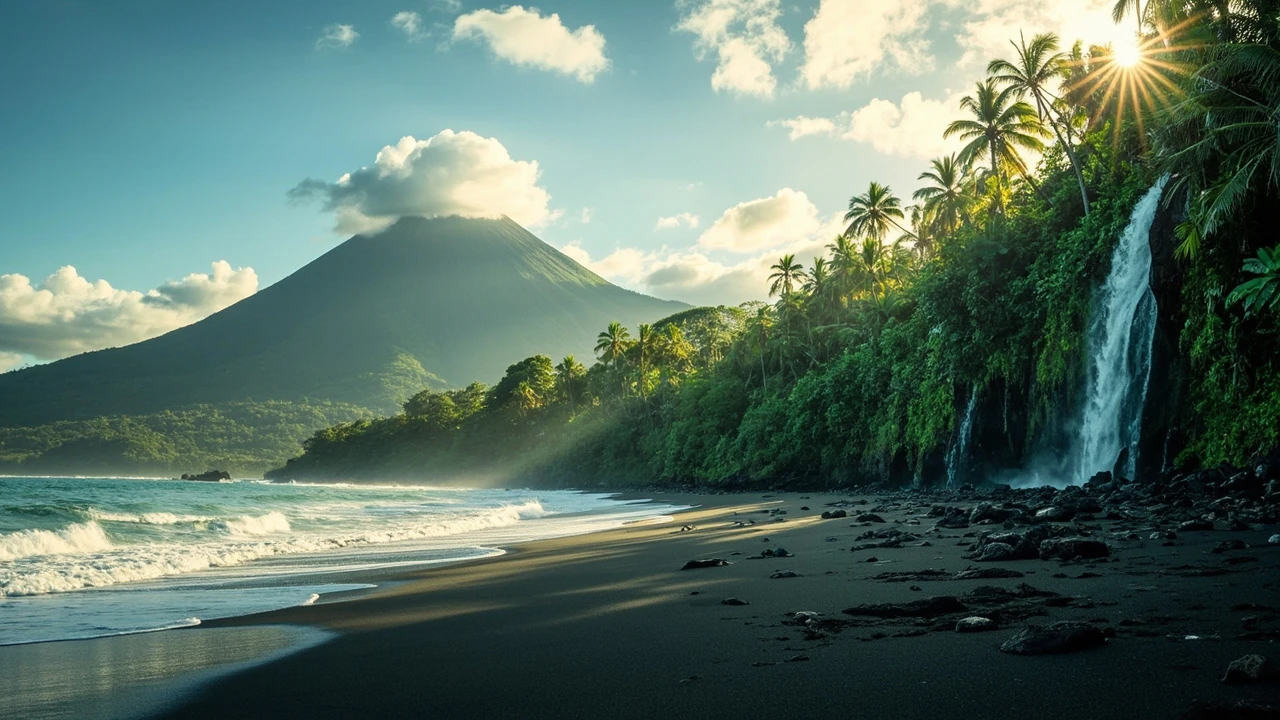
A first visit to Costa Rica can feel surprisingly difficult to plan because the country’s best-known places are spread across several distinct landscapes. You might leave San José for a volcano, spend a morning beneath rainforest canopy, and reach the coast only after a long drive, yet the coast offers a completely different experience from the Central Valley. Choosing among the Costa Rica famous landmarks requires more than comparing them on a map. The practical question is which combination of scenery, wildlife, outdoor activity, travel time, and road conditions fits your trip.
This guide organizes the major landmarks by region and helps you decide what to prioritize. It covers the cultural sites of San José, the northern volcanoes and cloud forests, the Central Pacific coast, the wildlife-rich south, and the Caribbean side. It also explains where to build a slower itinerary and where extra transportation can make a trip unnecessarily complicated.
Costa Rica famous landmarks: how to choose the right places for your trip
Costa Rica rewards travelers who divide their time among a few well-chosen destinations rather than attempting to cross the country for every postcard stop. The central mountains offer volcanoes, high-elevation scenery, and cool towns. The Pacific side provides Pacific coastline, surf beaches, marine wildlife, and sunsets. The Caribbean side has a wetter climate, different food, a livelier coast, and easy access to reefs and rivers. The Osa Peninsula and southern Pacific region deliver remote wildlife areas, while the Central Valley concentrates urban history and the country’s best-known cultural landmark.
Before choosing sites, consider five practical questions:
- How much time do you have? A visit to the Central Valley and Arenal can fit into a compact itinerary. Adding Tortuguero, Corcovado, or remote southern beaches usually requires several additional travel days.
- Do you prefer scenery, wildlife, or activity? Volcanoes and cloud forests are easy to combine. Wildlife generally needs more time and often an early start. Waterfalls can be visited in a day, while some activities are more meaningful with two.
- What is your comfort level with driving? Mountain roads, unpaved approaches, heavy rain, and limited public transportation can change how a place feels. A spectacular site may not be worth the journey if the drive consumes most of the day.
- Do you need established visitor services? Major destinations such as La Fortuna and Manuel Antonio generally offer a wider selection of accommodation, guides, restaurants, and transport connections than smaller destinations.
- Which season fits the experience you want? Conditions change across the dry and rainy seasons. You may gain clearer volcano views during a drier period but encounter stronger river flow and more dramatic waterfalls during the wet season.
| Landmark region | Best for | Typical pace | Main planning consideration |
|---|---|---|---|
| San José and the Central Valley | Culture, architecture, coffee-country scenery | 1–3 days | Use San José as a transport hub before heading north or south |
| Arenal and the Northern Highlands | Volcanoes, hot springs, cloud forests | 3–5 days | Build travel time into the itinerary rather than treating it as a side trip |
| Central Pacific coast | Beaches, wildlife tours, Manuel Antonio | 2–4 days | Pick one base rather than changing hotels repeatedly |
| Osa Peninsula and southern Pacific | Rainforest wildlife, remote beaches | 4–7 days | Road and boat conditions may require a conservative schedule |
| Caribbean coast | Reefs, cacao culture, relaxed coastal towns | 3–5 days | A different road network and climate from the Pacific side |
San José landmarks: start with the National Theatre and the capital’s central setting
San José is Costa Rica’s largest urban center and the country’s main arrival hub. It is not primarily a sightseeing city, but it contains one landmark that deserves time on almost any first itinerary: the Teatro Nacional Costa Rica, or National Theatre of Costa Rica. The building is known for its ornate exterior and richly decorated interior. Visiting it is a useful introduction to Costa Rican architecture, public culture, and the country’s historical relationship with European artistic traditions.
The surrounding city has a practical advantage over many smaller towns. Visitors can find restaurants, pharmacies, ATMs, supermarkets, intercity buses, domestic flights, and organized tours without making a special trip. If you arrive late, have a short layover, or want to acclimate before beginning a longer route, San José provides the most convenient base. The city also has a practical connection to Costa Rica famous landmarks because several major destinations sit within a few hours by road, although “a few hours” can expand significantly during heavy rain or weekend traffic.
Other central-city experiences include the National Museum, the Mercado Central, and the Museum of Costa Rican Art. The National Museum is particularly useful for understanding the country before traveling beyond the capital. It provides context for Costa Rica’s pre-Columbian history, the colonial period, the formation of the republic, and the political changes that shaped modern society.
One of the best nearby day trips is the coffee-growing highlands around the Central Valley. Plantation tours and farm visits can introduce you to coffee production while providing views of green slopes and distant mountains. These experiences are more intimate than the major natural landmarks, but they work well on a first day when long transfers would be tiring.
For active travelers, Irazú Volcano offers a different perspective from the Central Valley. It is one of the country’s best-known volcano landmarks and has a long history of visible crater activity. Visibility depends on cloud and atmospheric conditions, so a clear view cannot be guaranteed. The summit road and trail also require suitable conditions. Travelers with mobility concerns, young children, or limited hiking experience should ask local operators about current road access and trail conditions before setting out.
- Best first-day base: San José if you arrive with little time or prefer easy access to services.
- Best cultural priority: The National Theatre, with the National Museum for broader historical context.
- Best nearby active excursion: Irazú Volcano, subject to current access and weather conditions.
- Best pairing: San José with Arenal, allowing one travel day between the two.
Volcanoes and cloud forests in the Northern Highlands
The Northern Highlands contain some of the most recognizable landscapes associated with Costa Rica. Arenal Volcano, once the country’s most famous active-looking volcano, remains the visual centerpiece of the La Fortuna area. The classic view is still impressive, even though the volcano’s activity level has changed over time. It should be presented as a natural landmark to enjoy, not as a guarantee of flames, eruptions, or a specific nightly viewing experience.
Most travelers use La Fortuna as their base. The town is more practical for accommodations, restaurants, and tours than for sightseeing by itself. From there, visitors can choose a volcano overlook, forest walk, canopy activity, hot-spring visit, or a longer excursion. A waterfall such as La Paz can be combined with the area, but the standard route is a full day rather than a brief stop. Roads curve through agricultural land and forest, and rain can affect visibility and travel time.
Nearby Arenal Volcano National Park is the central protected landscape, although park access and conditions should be checked for the date of travel. Rather than treating the volcano as the only attraction, consider what else interests you. A visitor who wants wildlife may do better with birding and forest trails. Someone seeking a dramatic landscape may prefer a viewpoint and sunset. Families may find guided activities more comfortable than a long hike on wet terrain.
Farther northwest, Monteverde Cloud Forest offers a distinctly different ecosystem. Dense vegetation fills the view, mist hangs among the trees, and many paths wind through a landscape that feels cool and damp even when nearby lowlands are sunny. The area is known for hanging bridges, forest walks, birdwatching, and eco-tourism. It can be visited from Monteverde or Santa Elena, with lodge-based and day-trip options offering different degrees of immersion.
Choose Monteverde when your priority is forest atmosphere and wildlife rather than dramatic volcanic terrain. Allow enough time to explore without treating the cloud forest as a quick photo stop. A night in the area provides access to early-morning bird activity and a more complete sense of the forest. A long day trip from Arenal is possible, but it increases travel time and leaves less energy for the trails themselves.
| Northern destination | Signature experience | Best time to stay | Who will enjoy it most |
|---|---|---|---|
| Arenal and La Fortuna | Volcano scenery, forest trails, hot springs, waterfalls | 2–4 nights | First-time visitors, families, and travelers who want several activity types in one area |
| Monteverde Cloud Forest | Hanging bridges, misty forest, birdwatching | 1–3 nights | Nature lovers who prefer forest immersion over ocean scenery |
| Poás Volcano area | Crater landscape, high-altitude scenery | 1–2 nights | Visitors seeking a distinctive volcano stop close to the Central Valley |
Poás Volcano can be a worthwhile stop for travelers with limited time who want another volcanic landscape near San José. Its crater setting and elevated viewpoint offer a different experience from Arenal. However, access can be interrupted by weather, volcanic conditions, or park management decisions. Check official conditions shortly before visiting and avoid building a tight connection around the visit.
Central Pacific landmarks: Manuel Antonio, beaches, and wildlife-rich coast
The Central Pacific coast is the easiest part of Costa Rica to combine with the capital, and it offers a strong choice for travelers who want both wildlife and beach time. The area extends from the Tarcoles River region toward the southern edge of the Central Pacific. Most visitors stay in or around Manuel Antonio, Quepos, or nearby coastal communities.
Manuel Antonio National Park is the best-known choice. Its combination of rainforest, beaches, rocky coastlines, and wildlife-viewing opportunities makes it an efficient destination for a short trip. The park is popular, so visitors should arrive early to have more space and a better chance of observing animals with less disturbance. Trails range from accessible coastal paths to more demanding routes, but conditions change with tides, rain, and maintenance.
The nearby Rainforest Aerial Tram is another common attraction. Suspended above the forest, it provides a different perspective on the tree canopy and can be paired with walking excursions. Other coastal activities include kayaking, paddleboarding, snorkeling, and boat tours. These experiences are not interchangeable: a wildlife boat tour, a whitewater river trip, and a calm-water paddle offer different scenery, physical demands, and schedules.
Beaches around the Central Pacific range from calm swimming coves to surf-oriented beaches. Matapalo, Esterillos, and the wider Manuel Antonio area offer options for different preferences. When choosing a beach, consider whether you want swimming, surfing, long walks, shade, food nearby, or minimal development. The term “near Manuel Antonio” can describe places with very different access patterns, so ask specifically how far a property is from the shoreline and main access roads.
Farther south, the Osa Peninsula begins. It is less convenient but more strongly associated with wild landscapes. Corcovado National Park contains extensive rainforest and has a reputation for wildlife sightings, including sloths, monkeys, macaws, and other species. Its remoteness is part of the experience. A visit generally requires a longer transfer, an organized expedition, or a stay on the peninsula. Travelers who want only a few hours of wildlife viewing should use the Central Pacific instead.
- For a short beach-and-wildlife trip: Base yourself around Manuel Antonio for two or three nights.
- For serious rainforest wildlife: Consider a guided Osa Peninsula stay with a realistic transfer schedule.
- For a beach without major resort development: Look farther south toward the Osa region.
- For convenience: Use the Central Pacific as a final stop before the airport in the San José area.
That political history also includes the influence of liberal reform movements in the nineteenth century. The documented role of Freemasonry in Costa Rican civic development offers useful background on education, republican ideas, and the public figures who participated in the country’s early political life. This is not necessary to appreciate the National Theatre, but it can add depth for visitors interested in how public institutions and national identity developed.
Routing the Central Pacific as the last major stop can reduce backtracking. Travelers can begin in San José, continue north to Arenal or Monteverde, and then move south through the Central Valley toward the coast. The road journey itself crosses changing terrain, from highland coffee country to drier lowlands and coastal forest. It is a good practical reason to avoid changing bases more than necessary.
Southern Pacific landmarks: wildlife, surf towns, and the edge of the road
The southern Pacific coast attracts travelers looking for a slower rhythm, strong surf culture, and access to less developed scenery. Towns such as Santa Teresa, Nosara, Montezuma, and nearby beaches each have distinct identities. Santa Teresa is associated with a long, active beach community and surf. Nosara has become a well-known destination for surf and yoga, with wildlife and river areas nearby. Montezuma offers a smaller, more bohemian coastal atmosphere.
This region is among the strongest choices for Costa Rica famous landmarks that feel remote without requiring the logistics of the deep Osa Peninsula. You can reach beaches and river systems by road, though unpaved sections may change travel times considerably. Low bridges can be dangerous during heavy rain, and rivers that look manageable on a map can become difficult crossings after storms. Local advice is more valuable than a fixed estimate.
Playa Hermosa, Playa Camaran, and the beaches around Santa Teresa offer broad opportunities for walking, surfing, and sunsets. Wildlife opportunities are more incidental than at Manuel Antonio or Corcovado, though monkeys, birds, and other animals may appear around forested areas. The appeal here is the landscape rather than a checklist of major attractions.
Curubandé is known for its waterfall and remains one of the most recognizable natural features in southern Costa Rica. The road includes steep sections and river crossings, so it suits travelers who are comfortable with rural driving. The waterfall area has developed visitor services and can be busy. Access and conditions should be verified locally rather than assumed from older photographs.
For travelers interested in a remote national park experience, the Santa Elena sector provides access to Corcovado through the southern side of the peninsula. This is a more involved itinerary than staying near Manuel Antonio, but it can work well for travelers with enough time who want to experience the peninsula without committing to a long expedition farther north.
A sensible southern itinerary is not a checklist of every beach. Pick one or two focal areas, allow a travel day, and keep the final night simple. The distance may look manageable on a map, but road quality changes and weather interrupts movement. Two nights in a town is usually more rewarding than spending every day transferring between neighboring communities.
Caribbean landmarks: reefs, cacao country, and a different coastal rhythm
The Caribbean side of Costa Rica is often underestimated because many itineraries focus on the Pacific coast. That choice can mean missing a distinctive part of the country. The region has a more humid climate, lush lowland forests, broad beaches, and a relaxed Afro-Caribbean cultural influence. It is also a major center for cacao production and coastal tourism.
Puerto Viejo de Talamanca is the best-known base. The town offers a practical mix of services, restaurants, and nearby natural attractions. Cacao plantations in the area explain how the fruit is grown and processed, while the broad beaches of Puerto Viejo and Punta Uva attract many visitors. The Southern Caribbean Wildlife Refuge and Cano Blanco area are known for sloths and other wildlife, although sightings are never guaranteed.
Several marine attractions lie offshore, including Cahuita National Park, the Isla Con服务平台? Need not invent. Better: Cahuita National Park has coral reefs and is a major snorkeling/diving destination. The standard excursion departs from Cahuita, and actual reef conditions and operator arrangements should be checked directly. Do not imply guaranteed visibility.
On the route south, Caño Canoas and the rolling hills near Punta Uva offer a quieter alternative to busier beaches. farther inland, the Guápiles region and the Sarapiquí area provide a different combination of agricultural scenery and wildlife. Sarapiquí is especially useful for travelers seeking river systems, lowland rainforest, birding, and wildlife rather than a beach holiday.
| Caribbean area | Landmark experience | Best base | Practical note |
|---|---|---|---|
| Puerto Viejo and Cahuita | Beach, cacao plantations, snorkeling, reef scenery | Puerto Viejo | Good services and a natural base for a short regional itinerary |
| Punta Uva | Wide beach, turtle and wildlife viewing areas | Puerto Viejo or nearby accommodation | Check local conditions because wildlife encounters are not guaranteed |
| Caño Canoas | Calmer coastal scenery and river access | Caño Canoas | Usually more relaxed than the busier sections near Puerto Viejo |
| Sarapiquí | River travel, birding, lowland rainforest | Sarapiquí area | Requires a northbound transfer from the Caribbean coast |
The strongest case for the Caribbean is when the trip has room for two distinct sides of the country. A traveler can spend several days on the Pacific coast, cross by land, and finish with rainforest and reef activities. Trying to fit the Caribbean into a day trip from the Central Valley does not do the region justice.
How to build a landmark itinerary without spending your trip in a car
The best Costa Rica itinerary has one geographic spine and a few day trips around it. Rushing between San José, the Northern Highlands, the Central Pacific, and the Caribbean can consume most of the available time. Choose a primary area based on your main interest, then add one contrasting experience.
A balanced first-time itinerary might spend the first day in San José, travel north for three or four days around Arenal and Monteverde, and finish with three or four days on the Central Pacific. That arrangement offers urban history, volcanic scenery, cloud forest, beaches, and wildlife without attempting the Osa Peninsula or Caribbean coast.
Travelers drawn to wildlife can reverse the emphasis. They might use San José briefly, continue to Monteverde, and finish with more time in Manuel Antonio or on the Osa Peninsula. Beach-focused travelers may spend most of their stay on the Central or southern Pacific coast and include San José or Arenal as a short introductory stop.
- Choose the central base. Decide whether the trip should revolve around Arenal, the Central Pacific, the Osa Peninsula, or the Caribbean.
- Add one contrasting region. Pair a rainforest or wildlife trip with a beach stay, or a beach trip with a volcano excursion.
- Schedule travel days as full days when needed. Mountain weather and rural roads can turn a short map distance into a substantial journey.
- Group nearby activities. Combine sites within the same region rather than crossing the country for each attraction.
- Keep one flexible period. Leave room for weather, a tired travel day, a longer wildlife outing, or an unexpected change in conditions.
- Place the final night near the airport when possible. A short, low-stress transfer is easier than a long cross-country journey on departure day.
Transportation choices affect the experience. A rental car provides flexibility but requires familiarity with local driving conditions. Organized transfers can reduce stress on arrival days, while public buses offer local access but usually take longer. Domestic flights can save time across longer distances but add airport transfers and schedule constraints. There is no universally best method; the useful comparison is how much independence you want versus how much of your vacation you prefer to spend on the road.
Before booking, confirm current road conditions, park access, transport availability, and weather-related limitations with local operators or official sources. Do not rely on an old itinerary for a road that may have changed. This is especially important for remote areas, where a landslide, bridge repair, or river rise can affect a much larger portion of the journey than expected.
If you want to compare the way another destination organizes its major sights, landmarks in Ecuador beyond the Galápagos offers a useful reminder that wildlife is only one part of a broader travel experience. For a more urban comparison, Moscow and the scale of its Red Square area shows how a famous central site can shape the structure of an entire city itinerary.
A final pacing rule is simple: do not schedule more than two substantial activities in one day. Sightseeing in Costa Rica often involves heat, humidity, uneven paths, long transfers, and substantial walking. Two well-paced experiences leave space to notice the landscape rather than turning the trip into a sequence of timed stops.
Frequently asked questions
What are the most recognizable Costa Rica famous landmarks for a first visit?
Arenal Volcano, Manuel Antonio National Park, the National Theatre of Costa Rica, La Paz Waterfall Gardens, and Monteverde Cloud Forest are among the best-known choices. The best itinerary still depends on your interests. Manuel Antonio combines wildlife and beach scenery, Monteverde focuses on forest immersion, and the National Theatre provides cultural context.
Which Costa Rica landmark is best for families with children?
There is no single best option because ages and activity preferences matter. La Paz offers a structured waterfall visit with developed facilities nearby, while Manuel Antonio provides short coastal trails and wildlife viewing. Arenal can work for families who enjoy forest activities and short walks. Choose a site based on the youngest traveler’s stamina rather than adding the longest possible outing to the day.
Do I need more than one week to see Costa Rica’s major landmarks?
Seven days can cover San José, Arenal, and the Central Pacific if the itinerary is streamlined. Ten to fourteen days allows a more comfortable pace and makes room for the Osa Peninsula, the Caribbean, or a longer southern Pacific stay. The most important addition is not another destination but travel time and flexibility.
Is Monteverde worth visiting if I am already going to Arenal?
Yes, because the landscapes feel different. Arenal is associated with volcanic terrain, open views, waterfalls, and warm northern lowlands, while Monteverde emphasizes mist, dense forest, suspended bridges, and cloud-forest ecology. A separate stay is preferable when both are priorities. If time is short, Arenal offers a more compact combination of volcanic scenery and activities.
Which Costa Rica landmark is best for wildlife viewing?
Manuel Antonio is efficient for a short trip because wildlife opportunities and beaches are close together. Corcovado and other Osa Peninsula areas are better for travelers seeking a deeper rainforest experience and accepting more demanding travel. The Cahuita and Punta Uva areas provide additional Caribbean wildlife opportunities. No park guarantees a sighting, so quality guides and realistic expectations matter more than promotional promises.
What is the best Costa Rica landmark for a beach vacation?
Manuel Antonio is the most convenient all-around choice because it combines beaches with forest and wildlife scenery. Santa Teresa and the wider southern Pacific coast suit travelers who prefer a more active surf-town atmosphere and longer beach time. The Caribbean offers excellent beach options near Puerto Viejo and Punta Uva. The best choice depends on whether convenience, surf, remoteness, or reef access matters most.
Can I visit a volcano and relax at the beach in the same day?
You can sometimes combine them near Arenal and the northern Pacific coast, but it is not always the best use of a day. Travel time, rain, heat, and activity schedules can turn a simple itinerary into a long and tiring one. If both experiences are important, stay near each place rather than treating them as two boxes to check on departure day.
What should I pack for Costa Rica’s landmarks?
Pack lightweight clothing, closed shoes for trails, insect repellent, sun protection, a light rain layer, and dry storage for electronics and documents. Waterproofing matters more in the rainy season. At beaches and national parks, follow local guidance about swimming currents, wildlife distance, trail conditions, and items that should remain out of sight.
Are Costa Rica’s landmarks suitable for travelers with limited mobility?
Some are, but the level of accessibility varies. The National Theatre and urban cultural sites are generally more manageable than forest trails, river crossings, crater viewpoints, and remote beaches. At nature sites, ask about boardwalks, transport drop-offs, vehicle access, and current trail conditions. A shorter route within a major destination may provide more satisfaction than forcing a difficult route between distant highlights.
What is the most common mistake when planning a Costa Rica landmark trip?
The most common mistake is underestimating travel between regions. Maps can make the country look compact, but mountain roads, rain, unpaved surfaces, and slow rural crossings consume hours. The second mistake is trying to see every highlighted place. Choose one primary region, one contrasting region, and a realistic number of activities, then confirm current access and transport conditions before each major outing.
Leave a Reply